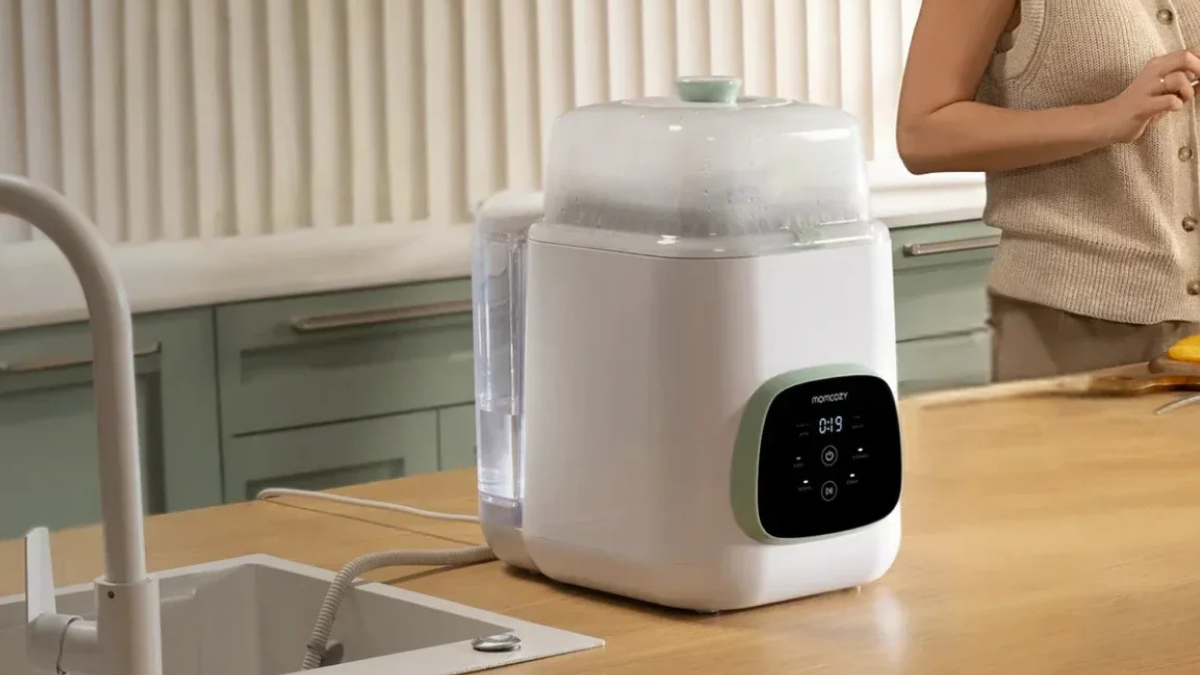
Cleaning baby bottles can quickly become one of the most repetitive tasks for parents and caregivers. Bottles, nipples, collars, caps, breast pump parts, and other feeding accessories often need to be cleaned frequently, and doing everything by hand can take considerable time. The Momcozy Bottle Washer is designed to simplify this routine by combining several cleaning functions into a single appliance.
For parents balancing feeding schedules, work, household responsibilities, and rest, convenience can make a meaningful difference. A bottle washer can help reduce the amount of manual scrubbing required while providing a more organized approach to cleaning feeding accessories. However, understanding how such an appliance works and what features to consider is important before deciding whether it is suitable for a household.
What Is a Bottle Washer?
A specialized appliance designed to clean baby bottles and related feeding equipment. Unlike a traditional dishwasher, a bottle washer is generally designed around the smaller components and shapes commonly found in baby-feeding products.
The purpose is to automate some of the repetitive steps involved in bottle cleaning. Depending on the model, a machine may combine washing, rinsing, drying, and sterilizing functions.
This can be particularly useful for families who use multiple bottles throughout the day. Instead of manually washing each bottle immediately after feeding, parents can place compatible components into the appliance and run an appropriate cycle.
A bottle washer does not eliminate the need for careful handling and inspection, but it can make the overall cleaning process more manageable.
Why Bottle Cleaning Matters
Baby bottles and feeding accessories come into direct contact with milk or formula. Residue can remain in small spaces, including around nipples, valves, threads, and seals.
Thorough cleaning is therefore an important part of bottle care. Parents need to follow the cleaning instructions provided by the bottle and formula manufacturers, as well as relevant pediatric or public-health guidance.
A dedicated bottle washer can help automate the physical work involved in cleaning, but users still need to ensure that the components being washed are compatible with the appliance.
Before using a new machine, parents should check the manufacturer’s instructions for loading, detergent, water, cycle selection, and maintenance.
The Convenience of Automation
Parents already have many repetitive tasks throughout the day, and bottle cleaning can add another layer of work.
Automating the washing process can give caregivers more time to focus on other responsibilities. Instead of standing at the sink scrubbing several bottles and accessories, they can prepare the machine and allow the cleaning cycle to run.
This can be especially helpful during periods when babies are feeding frequently.
Automation may also provide consistency. When the machine is used correctly, each cycle follows a defined process rather than relying entirely on manual scrubbing.
However, automation should not be confused with complete hands-off maintenance. Users still need to load the machine correctly, keep it clean, refill water or other consumables as required, and inspect bottles after washing.
Washing Multiple Components
Baby feeding systems often include more than just a bottle. A typical setup may include a bottle body, nipple, collar, cap, valve, or other components.
These small parts can make hand washing time-consuming because each piece needs to be separated and cleaned individually.
A dedicated bottle washer is designed to accommodate these kinds of components, although the exact capacity depends on the model.
Before loading the machine, users should disassemble bottles according to the manufacturer’s instructions. Keeping components separated can help ensure that water and cleaning action reach areas where residue may collect.
Parents should also avoid overcrowding the machine. Proper loading is important for effective cleaning.
Washing, Rinsing, Drying, and Sterilizing
One of the most useful aspects of an all-in-one bottle appliance is the ability to perform multiple stages of bottle care.
Washing removes milk or formula residue. Rinsing helps remove detergent and loosened debris. Drying reduces remaining moisture after the cleaning cycle.
Some bottle washers also include a sterilizing or sanitizing function. The exact process depends on the model and may involve heat or another method.
It is important to understand that “cleaning” and “sterilizing” are not identical processes. Washing removes dirt and residue, while sterilization or sanitization is intended to reduce microorganisms according to the method used.
Parents should follow current guidance from healthcare professionals and the appliance manufacturer when deciding which cycle to use.
Saving Time for Busy Parents
Time is often one of the most valuable resources for new parents. Feeding schedules can be unpredictable, and daily chores can quickly accumulate.
A bottle washer can help by reducing one repetitive household task. Instead of manually washing bottles after every feeding, parents can organize used components and clean them together.
The time saved can be used for other responsibilities or simply for rest.
This benefit can be particularly noticeable in households that use bottles frequently. Someone using only one bottle occasionally may not need a dedicated appliance, while a family managing many bottles and pump components may find the convenience more valuable.
Helpful for Breast Pump Accessories
Some bottle-washing appliances may also be useful for compatible breast pump components. Pumping equipment can include several small parts that require frequent cleaning.
However, compatibility should never be assumed. Parents should check the specific Momcozy model and the manufacturer’s instructions before placing breast pump components inside the machine.
Different materials may have different temperature and cleaning requirements. Some components may also require special handling.
When compatibility is confirmed, combining bottle and pump-part cleaning into one routine can further simplify household chores.
Water and Detergent Considerations
Using the correct water and detergent is an important part of operating a bottle washer.
Users should follow the manufacturer’s recommendations regarding the type and quantity of detergent. Using too much detergent may leave residue, while using an unsuitable product could affect the appliance or feeding components.
Water quality can also matter. Hard water may leave mineral deposits inside an appliance over time. Regular maintenance and cleaning can help reduce buildup.
The machine’s water tanks, filters, spray components, and other areas should be maintained according to the manufacturer’s instructions.
Maintenance Is Essential
Like any appliance that regularly handles food-related residue and water, a bottle washer needs regular cleaning.
Parents should follow the manufacturer’s maintenance schedule and pay attention to areas where residue or moisture can accumulate.
A machine that is not maintained properly may develop odors, buildup, or reduced performance.
Keeping the appliance itself clean is therefore just as important as cleaning the bottles inside it.
Users should also inspect bottles and accessories after each cycle. If residue remains, the item should be cleaned again rather than assuming the machine has removed everything.
Safety Considerations
Safety is particularly important when an appliance is being used for baby-feeding equipment.
Parents should read the complete instructions before using the machine and ensure that every component placed inside is compatible.
Hot water and heated drying or sterilizing cycles can create burn hazards. Users should allow the appliance and its contents to cool when necessary before handling them.
The appliance should also be positioned securely and operated according to the manufacturer’s electrical and water-supply requirements.
Children should not operate the machine or have access to hot components, detergents, or cleaning solutions.
Is a Bottle Washer Worth It?
For parents who wash several bottles every day, the convenience may justify the cost and counter space. The appliance can reduce manual work and create a more organized cleaning process.
For families who use very few bottles or already have an effective dishwasher routine, the additional appliance may provide less benefit.
The decision should therefore consider bottle usage, available kitchen space, cleaning habits, budget, and the types of feeding equipment being used.
Conclusion
Designed to make one of the most repetitive parts of baby care more convenient. By automating aspects of bottle cleaning and, depending on the model, potentially combining washing, rinsing, drying, and sterilizing functions, a dedicated bottle appliance can help simplify daily routines.
Its greatest advantage is convenience. Parents who regularly clean multiple bottles and feeding accessories may appreciate having a specialized appliance that reduces manual scrubbing and organizes the cleaning process.
At the same time, proper use remains essential. Parents should check compatibility, follow cleaning instructions, use appropriate detergent, maintain the appliance regularly, and inspect feeding equipment after each cycle.
A bottle washer is not a substitute for responsible bottle hygiene, but it can be a useful tool for making that routine easier to manage. For families with frequent bottle use, the right appliance may provide valuable time savings and a more convenient approach to everyday feeding-equipment care.