Excess humidity can make an indoor environment feel uncomfortable. Rooms with high moisture levels may feel warmer and stuffier, while condensation can appear on windows, walls, and other surfaces. In some homes, particularly bathrooms, bedrooms, basements, laundry areas, and other spaces with limited ventilation, controlling humidity can become an important part of maintaining a comfortable indoor environment.
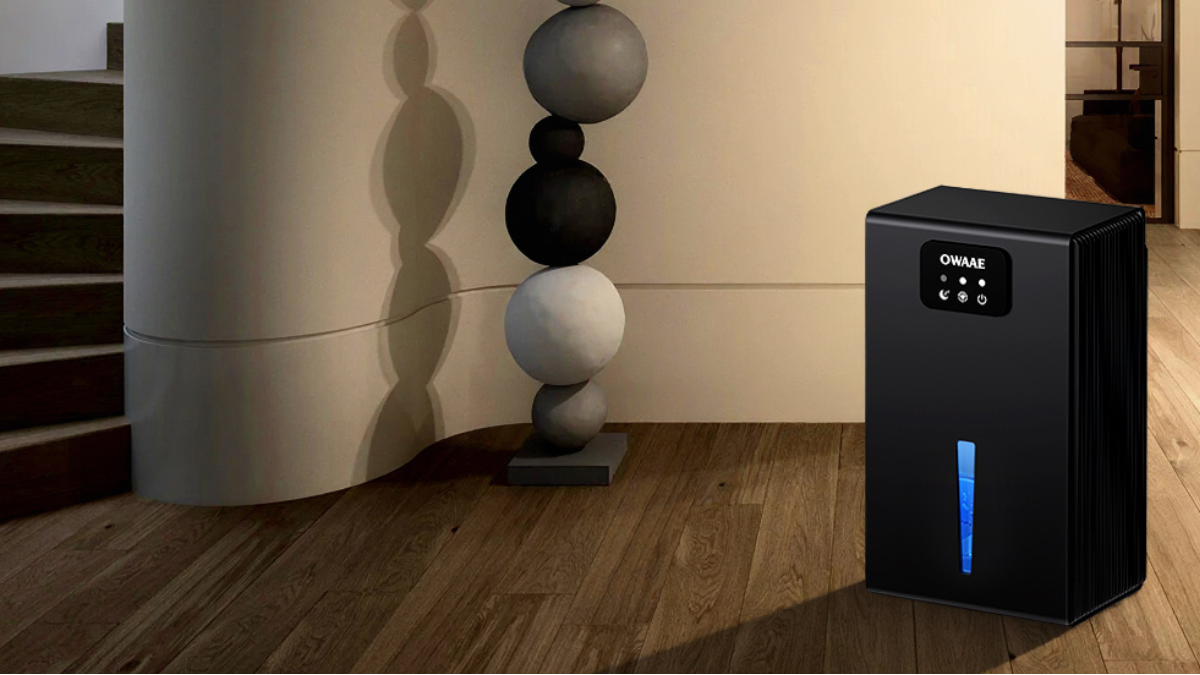
A dehumidifier is designed to remove moisture from the air and collect it as water. The OWAAE Dehumidifier is intended to provide a convenient option for people looking to manage indoor humidity in smaller spaces. Depending on the specific model, features can include a water collection tank, automatic shutoff, quiet operation, adjustable controls, timers, and other convenience functions.
What Is a Dehumidifier?
This is an electrical appliance that reduces the amount of moisture in indoor air. It works by drawing humid air into the unit and processing it so that moisture can be collected.
The extracted water is typically stored in a removable tank. Once the tank reaches its capacity, the user can empty it and return it to the appliance.
Some dehumidifiers also offer continuous drainage options, depending on the design. This can be useful when the appliance needs to operate for extended periods without requiring frequent tank emptying.
For homeowners and renters, a dehumidifier can be particularly useful in rooms where humidity tends to remain elevated.
Why Humidity Control Matters
Humidity is a normal part of indoor air, but excessive moisture can affect comfort. A room with high humidity may feel sticky or stuffy, especially during warm weather.
Moisture can also contribute to condensation. Windows, mirrors, walls, and other cool surfaces may collect water when humid air comes into contact with them.
Keeping indoor humidity at a reasonable level can therefore make a room feel more comfortable and may help protect household belongings from excessive moisture.
However, a dehumidifier should not be viewed as a replacement for proper ventilation, leak repairs, or other measures needed to address the source of excessive moisture.
Compact Design and Placement
One of the first considerations when choosing a dehumidifier is where it will be used. Compact units are generally intended for smaller rooms or specific areas rather than entire large homes.
It may be suitable for spaces such as bedrooms, bathrooms, closets, offices, laundry areas, or other rooms where localized humidity control is needed, depending on its rated capacity.
Placement matters. The unit should have adequate space around its air intake and outlet so that air can circulate properly. Blocking these areas with furniture, curtains, clothing, or other objects can reduce performance.
Users should always follow the manufacturer’s recommendations regarding placement and operating conditions.
Water Collection
A key part of any dehumidifier is its water collection system. As moisture is removed from the air, the resulting water accumulates in a tank.
The size of the tank influences how often it needs to be emptied. A smaller tank may require more frequent attention, while a larger tank can provide longer operation between emptying.
Many modern dehumidifiers include an automatic shutoff feature that stops the appliance when the water tank becomes full. This can reduce the risk of continued operation after the collection container has reached capacity.
Users should check the tank regularly, particularly when first learning how quickly the appliance collects water in a particular room.
Noise and Bedroom Use
Noise can be an important factor when selecting a dehumidifier for a bedroom or office. Like other appliances that contain fans or compressors, dehumidifiers can produce sound while operating.
A quieter design may be preferable for people who plan to use the appliance while sleeping, studying, working, or relaxing.
The perceived noise level can vary depending on the room, surface, operating mode, and individual sensitivity. Buyers should review the manufacturer’s noise specifications where available.
Placing the appliance on a stable, level surface can also help prevent unnecessary vibration.
Energy and Operating Efficiency
Because a dehumidifier may operate for several hours at a time, energy consumption is worth considering. Users should review the power requirements and efficiency information for the particular model they are considering.
Rather than running a dehumidifier continuously without monitoring conditions, users can take advantage of automatic controls, timers, or humidity settings when those features are available.
Closing windows and doors while operating a dehumidifier can also help prevent additional humid outdoor air from entering the room, although appropriate ventilation remains important for indoor air quality.
The ideal operating schedule depends on the room, climate, humidity level, and appliance capacity.
Automatic Controls and Timer Functions
Convenience features can make a dehumidifier easier to operate. Depending on the model, an OWAAE unit may include features such as automatic shutoff, adjustable settings, or a timer.
A timer can be useful when users want the appliance to operate for a particular period rather than running continuously.
Automatic shutoff is particularly convenient because it can stop the unit when the water tank is full. Users should still empty and clean the tank regularly rather than relying exclusively on the automatic function.
Simple controls can also make it easier to adjust the appliance according to changing conditions.
Where a Dehumidifier Can Be Useful
Different areas of a home can experience different humidity levels.
Bathrooms may become humid after showers, while laundry rooms can experience increased moisture when clothes are being washed or dried.
Bedrooms can sometimes feel uncomfortable when humidity is high, particularly in warm climates. Closets and storage spaces may also benefit from careful humidity management when moisture tends to accumulate.
Basements and other enclosed areas can be especially prone to humidity, although the appropriate type and capacity of dehumidifier depends on the size and conditions of the space.
For larger areas or serious moisture problems, a small portable unit may not be sufficient. In such cases, a larger dehumidification system or professional assessment may be more appropriate.
Cleaning and Maintenance
Regular maintenance is essential for keeping a dehumidifier operating properly.
The water tank should be emptied and cleaned according to the manufacturer’s instructions. Standing water can become dirty over time, so routine cleaning is an important part of appliance care.
Air filters, when present, should also be checked and cleaned or replaced according to the recommended schedule. A clogged filter can restrict airflow and affect performance.
The exterior of the appliance can usually be wiped with an appropriate cloth, but users should avoid exposing electrical components to unnecessary moisture.
Before performing maintenance, the appliance should be switched off and disconnected from its power source when the manufacturer’s instructions require it.
Proper Placement and Safety
A dehumidifier should be placed on a stable, level surface where it cannot easily be knocked over.
Users should also keep electrical cords away from water and avoid operating the appliance in conditions that exceed the manufacturer’s specifications.
The unit should not be covered while operating because doing so can restrict airflow and potentially cause overheating.
It is also important to use the correct electrical supply and follow all safety instructions provided with the product.
If the appliance develops an unusual smell, excessive heat, damaged wiring, or abnormal operation, it should be switched off and inspected according to the manufacturer’s guidance.
Choosing the Right OWAAE Model
Not every dehumidifier is designed for the same environment. Consumers should consider the room size, expected humidity level, water-tank capacity, operating noise, power consumption, and available features.
A compact model may be convenient for a bedroom or bathroom, while a larger space may require a unit with greater moisture-removal capacity.
Buyers should also consider how often they are willing to empty the water tank. If the appliance will operate for long periods, a model with an appropriate tank capacity or drainage option may be more convenient.
Checking the exact specifications is important because features can vary among different models.
Final Thoughts
A practical option for people looking to manage excess moisture in specific areas of their home. By removing water from humid air, a dehumidifier can help improve the perceived comfort of a room and reduce problems associated with excessive indoor moisture.
Features such as automatic shutoff, water collection, compact construction, adjustable controls, and timer functions can make everyday operation more convenient, depending on the model.
However, choosing the right appliance requires more than simply looking at the brand. Consumers should consider the size of the room, humidity conditions, tank capacity, operating noise, power requirements, maintenance needs, and specific features of the model.
Regular cleaning and appropriate placement are also essential for safe and effective use. A dehumidifier should complement, rather than replace, good ventilation and proper solutions for leaks or other sources of moisture.
For people dealing with uncomfortable humidity in bedrooms, bathrooms, offices, laundry rooms, closets, or other enclosed areas, it can be one practical tool for creating a more comfortable indoor environment. With the right model and responsible operation, it can become a useful part of a home’s humidity-management routine.