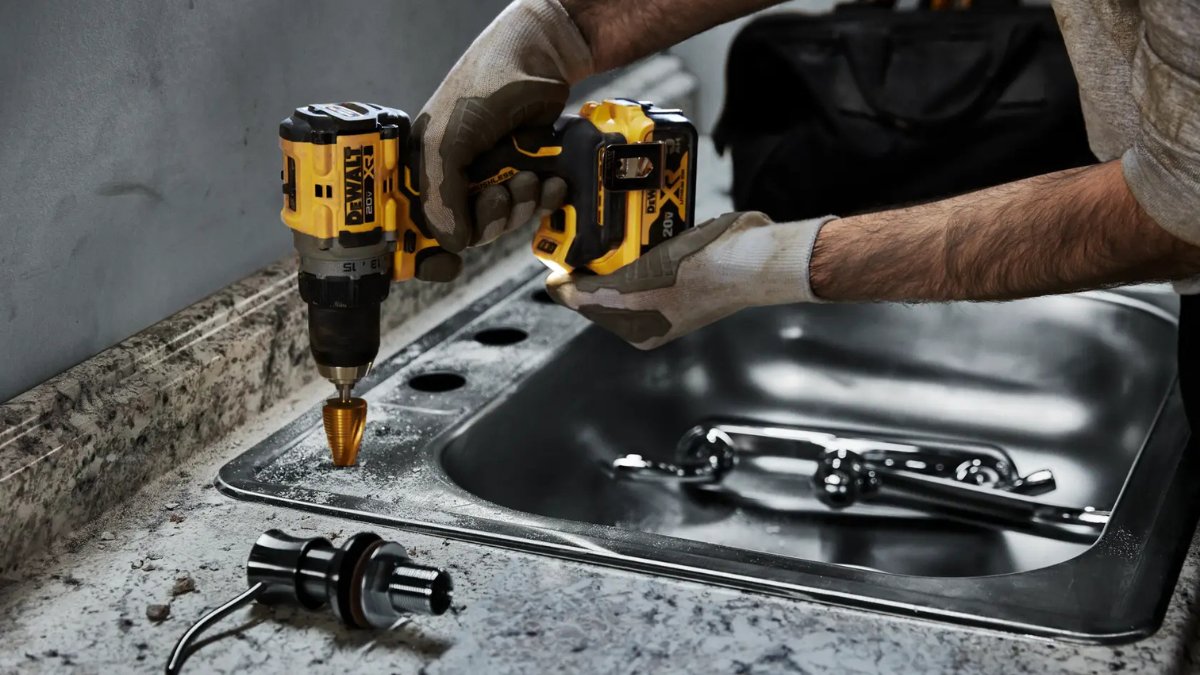
When it comes to cordless power tools, a DEWALT impact driver is one of the most useful tools for construction professionals, contractors, mechanics, woodworkers, and DIY enthusiasts. Designed to deliver high torque in a compact package, an impact driver makes it easier to drive screws, bolts, and fasteners quickly and efficiently.
They has built a strong reputation for producing durable and powerful cordless tools, and its impact-driver lineup offers options for different applications and budgets. Whether you are working on a construction project, assembling furniture, installing decking, or handling demanding fastening jobs, choosing the right impact driver can make a significant difference.
What Is a DEWALT Impact Driver?
An impact driver is a power tool specifically designed for driving fasteners. Unlike a conventional drill, an impact driver combines rotational force with rapid hammering action. When the tool encounters resistance, its internal impact mechanism delivers additional torque to help continue driving the fastener.
This design gives an impact driver several advantages. It can handle difficult fastening jobs while putting less strain on the user’s wrist compared with manually applying high torque. It is also generally shorter and more compact than many cordless drills, making it useful when working in tight spaces.
They offers impact drivers using its cordless battery platforms, including the popular 20V MAX range. Many models feature brushless motors, multiple speed settings, LED lights, and quick-release hex chucks.
Why Choose a DEWALT Impact Driver?
One of the biggest reasons people choose is its focus on durability and performance. Construction and professional jobs can put considerable stress on power tools, so a reliable impact driver needs to withstand repeated use.
These are available in different configurations, allowing users to select a model based on the amount of power, size, and features they need.
Another advantage is the cordless design. Without a power cord, users can move around a job site more easily and work in locations where electrical outlets are unavailable. Battery-powered tools can also be convenient for outdoor projects, remodeling work, and remote construction sites.
Power and Torque
Torque is one of the most important specifications to consider when buying an impact driver. Torque determines how effectively the tool can handle resistance while driving fasteners.
For basic DIY projects, an extremely high-torque impact driver may not be necessary. However, professionals working with long structural screws, heavy-duty fasteners, or demanding construction applications may benefit from a more powerful model.
For example, DEWALT’s higher-performance 20V MAX XR impact drivers are designed to provide substantial fastening power while maintaining a relatively compact form. Models such as the DCF860 are aimed at users who want high torque and advanced control.
It is important to remember that maximum torque is not the only specification that matters. A powerful tool should also offer good speed control so that users can avoid overdriving screws or damaging materials.
Brushless Motors
Many modern DEWALT impact drivers use brushless motors. Compared with traditional brushed motors, brushless technology can offer improved efficiency, longer motor life, and better performance.
A brushless impact driver can be particularly useful for professionals who use their tools frequently. Better efficiency may also help users get more work from a battery charge, although actual runtime depends on factors such as battery capacity, material, fastener size, and workload.
For occasional DIY use, a brushed tool can still perform well. However, if the price difference is reasonable and the tool will be used regularly, a brushless model can be an attractive long-term investment.
Compact Design
One of the defining features of an impact driver is its compact size. This is particularly useful when working in narrow areas where a conventional drill may be difficult to position.
A compact impact driver can also be easier to carry around a job site. When a contractor is using a tool repeatedly throughout the day, reducing unnecessary weight and bulk can make the work more comfortable.
The compact and ATOMIC models are designed for applications where portability and accessibility are priorities. These tools can be useful for cabinet installation, woodworking, electrical work, maintenance, and general construction.
Speed and Control
Modern impact drivers are not simply about maximum power. Control is equally important.
Many models offer multiple speed or application-control settings. Lower settings can be useful when driving smaller screws or working with delicate materials, while higher settings can provide the speed and power needed for demanding fastening applications.
Variable-speed triggers also allow users to gradually increase speed rather than immediately running the tool at full power.
This control is especially important when working with wood. Excessive torque can strip screw heads, damage surfaces, or drive fasteners too deeply into the material.
Impact Driver vs. Drill
A common question is whether someone should buy an impact driver or a cordless drill.
The two tools serve different purposes.
A drill is generally more versatile for drilling holes because it can accommodate a wide range of drill bits and accessories. It also provides a smoother rotational action, which is useful for many drilling applications.
An impact driver, on the other hand, is optimized for driving screws and fasteners. Its impact mechanism provides additional torque when resistance increases.
For someone who regularly performs construction or woodworking projects, owning both tools can be ideal. The drill can be used for drilling holes, while the impact driver handles fastening.
Battery Considerations
Battery capacity is commonly expressed in amp-hours, or Ah. Higher-capacity batteries can generally provide longer runtime, although they may also add weight and bulk.
A smaller battery can make a compact impact driver easier to handle, especially for overhead work or tasks requiring frequent movement. A larger battery can be more appropriate for extended professional applications.
Users should also check battery compatibility before purchasing. They offers different cordless platforms, so a battery designed for one voltage system should not automatically be assumed to work with every DEWALT tool.
What Can You Use an Impact Driver For?
They can be useful for a wide range of tasks, including:
- Driving wood screws
- Installing decking
- Building furniture
- Installing cabinets
- Construction framing
- Fastening metal components
- General home repairs
- Automotive and mechanical fastening with appropriate accessories
- Installing fixtures and brackets
- Assembling outdoor structures
The correct bits and sockets should always be selected for the specific fastener and application.
Choosing the Right DEWALT Impact Driver
The best model depends on how you plan to use it.
For occasional household projects, a compact and reasonably priced model may provide everything you need. If portability is your priority, an ATOMIC compact impact driver can be an excellent choice.
For professionals who need more power, speed, and advanced control, a higher-end 20V MAX XR model may be a better investment.
You should consider several factors before purchasing:
Power: Choose enough torque for the fasteners and materials you regularly work with.
Size: A compact tool is advantageous when working in confined areas.
Motor: Brushless motors are a good choice for frequent and demanding use.
Speed settings: Multiple settings provide better control across different applications.
Battery system: If you already own DEWALT cordless tools, staying within a compatible battery platform can be convenient.
Kit or bare tool: A kit includes batteries and a charger, while a bare tool can be cheaper if you already have compatible batteries.
Final Thoughts
They can be an excellent addition to any power-tool collection. Its combination of high torque, compact design, cordless convenience, and speed control makes it particularly useful for fastening applications.
The right model ultimately depends on your workload. DIY users may prefer a compact, affordable option, while contractors and professionals may benefit from the greater performance and features of a higher-end brushless model.
Before buying, compare torque, size, battery compatibility, speed settings, motor technology, and included accessories. Instead of choosing the most powerful tool simply because it has the highest specifications, select a model that matches the work you actually perform.