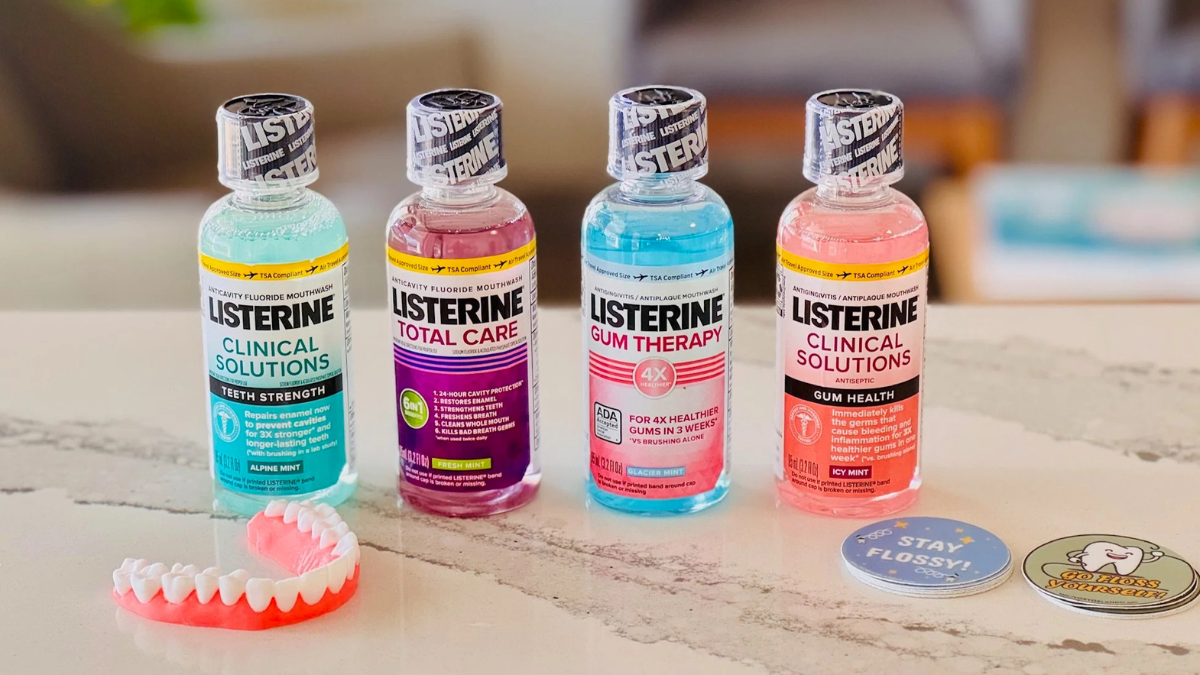
A good oral care routine involves more than brushing your teeth twice a day. Flossing and other forms of interdental cleaning help remove debris from areas a toothbrush may miss, while mouthwash can provide an additional step for freshness and oral hygiene. Among the most recognizable mouthwash brands, Listerine has become widely associated with antiseptic rinses designed to help address germs, plaque, gingivitis, and bad breath.
Offers several mouthwash formulas, and the benefits can vary depending on the specific product. Some are designed primarily for plaque and gingivitis control, while others contain fluoride to help prevent cavities. Understanding these differences can make it easier to choose a formula that fits your everyday oral care needs.
A brand of oral rinses available in multiple formulas and flavors. Its antiseptic mouthwashes are designed to help reduce germs associated with bad breath, plaque, and gingivitis. The brand also offers products with additional purposes, including anticavity protection and formulas designed for specific oral-care concerns.
For example, this is marketed as a germ-killing rinse that helps reduce bad breath, plaque, and gingivitis. The manufacturer states that the product kills 99.9% of germs associated with these concerns and recommends rinsing for 30 seconds twice daily when used according to its directions.
Because Listerine has different formulations, consumers should check the label rather than assuming that every bottle provides exactly the same benefits.
How Does Listerine Work?
Antiseptic mouthwash works differently from toothpaste. Instead of physically brushing the teeth, the liquid is swished around the mouth, allowing it to contact areas throughout the oral cavity.
Traditional Listerine antiseptic formulas contain a combination of essential oils, including eucalyptol, menthol, methyl salicylate, and thymol. According to the brand, these ingredients contribute to its antimicrobial activity and help target germs associated with plaque, gingivitis, and bad breath.
The rinsing action can also help reach areas that may be difficult to clean thoroughly with a toothbrush alone. However, mouthwash should be viewed as an addition to a complete oral hygiene routine rather than a replacement for brushing or cleaning between the teeth.
The American Dental Association notes that mouthrinses can provide additional benefits for certain oral health concerns but do not replace daily brushing and flossing.
Potential Benefits of Listerine Mouthwash
One of the most noticeable benefits of mouthwash is the feeling of freshness it can provide. Listerine antiseptic products are formulated to address germs associated with bad breath, while their flavors provide a strong, clean sensation.
For people who experience occasional bad breath, adding an appropriate mouthwash to an established oral hygiene routine can be a convenient way to supplement brushing and interdental cleaning.
Persistent bad breath, however, can sometimes be associated with dental or medical issues. If it continues despite good oral hygiene, speaking with a dentist can help identify the underlying cause.
2. Helps Control Plaque
Plaque is a sticky bacterial film that continually develops on teeth. If it is not adequately removed, it can contribute to gum problems and tooth decay.
Certain Listerine antiseptic formulas are specifically intended to help reduce plaque. The American Dental Association has accepted Listerine Antiseptic based on evidence supporting its safety and efficacy in helping prevent and reduce plaque above the gumline and gingivitis when used as directed.
This makes mouthwash potentially useful as one component of a broader plaque-control routine.
3. Supports Gum Health
Gingivitis is an early form of gum disease commonly associated with plaque buildup. Symptoms can include red, swollen, or bleeding gums.
Some Listerine formulas are specifically designed for gum health. The ADA lists several Listerine products with evidence supporting claims related to reducing or preventing gingivitis and plaque above the gumline.
However, mouthwash should not be considered a substitute for professional dental care when gum problems are persistent or severe.
4. Some Formulas Help Prevent Cavities
Not all mouthwash products have the same purpose. Some Listerine formulas contain fluoride and are designed to help prevent tooth decay.
For example, the ADA has accepted Listerine Total Care Anticavity Fluoride Mouthwash based on evidence that it is safe and effective in helping prevent tooth decay when used as directed.
This demonstrates why selecting a mouthwash according to its active ingredients and intended purpose is important.
Choosing the Right Listerine Formula
If your primary concern is bad breath and general freshness, an antiseptic formula may be appropriate. If you are particularly focused on gum health, a formula specifically marketed for plaque and gingivitis may be more relevant.
For people concerned about cavity prevention, a fluoride mouthwash may be worth considering. There are also alcohol-free options available, including Listerine Total Care Mild Alcohol Free Anticavity Fluoride Mouthwash, which has received ADA acceptance for helping prevent tooth decay when used as directed.
Product availability and formulations can vary by country, so it is always important to read the packaging of the specific product you are purchasing.
How to Use Listerine Mouthwash
Using mouthwash correctly is important. Follow the directions printed on your particular bottle because the recommended amount and duration can vary between products.
The manufacturer recommends rinsing for 30 seconds twice daily, morning and night.
A typical routine can involve:
- Brush your teeth thoroughly with fluoride toothpaste.
- Clean between your teeth using floss or another interdental cleaner.
- Use mouthwash according to the product label.
- Swish for the recommended amount of time.
- Spit the mouthwash out rather than swallowing it.
Mouthwash should complement, rather than replace, brushing and interdental cleaning.
Is Listerine Suitable for Everyone?
This is not automatically appropriate for every person or every age group. The American Dental Association advises that children younger than six should generally not use mouthrinse unless directed by a dentist because they may accidentally swallow significant amounts.
Adults and older children should follow the specific age recommendations and warnings printed on the product packaging.
People with particular dental conditions, oral irritation, or other concerns may also benefit from discussing mouthwash choices with a dental professional. If a particular formula causes discomfort or irritation, discontinue use and consider asking a dentist about alternative products.
Listerine and the ADA Seal of Acceptance
The American Dental Association’s Seal of Acceptance can be useful when evaluating oral-care products. The ADA explains that products carrying the Seal have been evaluated against specific safety and effectiveness requirements, with manufacturers providing scientific evidence to support the claims being evaluated.
Several products have received ADA acceptance for specific benefits. Importantly, the Seal applies to the particular product and claims evaluated; it should not be interpreted as meaning every Listerine product has identical properties or benefits.
Checking the label and the specific product listing is therefore more useful than relying on the brand name alone.
Things to Consider Before Buying
Consider your main oral-care goal. Are you looking for fresher breath, plaque and gingivitis control, cavity protection, or an alcohol-free option?
You should also consider flavor and sensitivity. Some antiseptic formulas have a strong taste or sensation that not everyone enjoys. If you find a particular formula uncomfortable, another formulation may be more suitable.
It is also important to remember that mouthwash cannot undo poor brushing habits. The foundation of oral hygiene remains regular brushing with fluoride toothpaste and cleaning between the teeth.
Final Thoughts
Listerine mouthwash offers a broad selection of formulas designed for different aspects of oral care. Depending on the specific product, it may help freshen breath, reduce plaque and gingivitis, or provide fluoride-based cavity protection. Several Listerine products have also received the American Dental Association’s Seal of Acceptance for specific oral-health claims.
The best way to use is as part of a complete oral hygiene routine rather than as a replacement for brushing and interdental cleaning. Choosing the right formula, following its directions, and paying attention to individual needs can help make mouthwash a practical addition to everyday dental care.
If you have persistent bad breath, bleeding gums, tooth pain, or other ongoing oral-health concerns, professional dental advice is more appropriate than relying on mouthwash alone.