Heat pressing has been around for decades, but until recently, it was a craft dominated by bulky, manual machines that required constant adjustment and hands-on monitoring. For beginners, these traditional presses often felt intimidating; for professionals, they were labor-intensive and time-consuming. A smart, automated solution that promises to make heat pressing not only easier, but also faster, safer, and more consistent.
Whether you’re running a T-shirt side hustle, designing custom merch for your Etsy shop, or simply want to enjoy stress-free DIY projects at home, this machine could be a game changer. In this guide, we’ll explore its features, performance, pros and cons, and real-world applications so you can decide if it’s worth the investment.
One-Touch Automation: How It Works
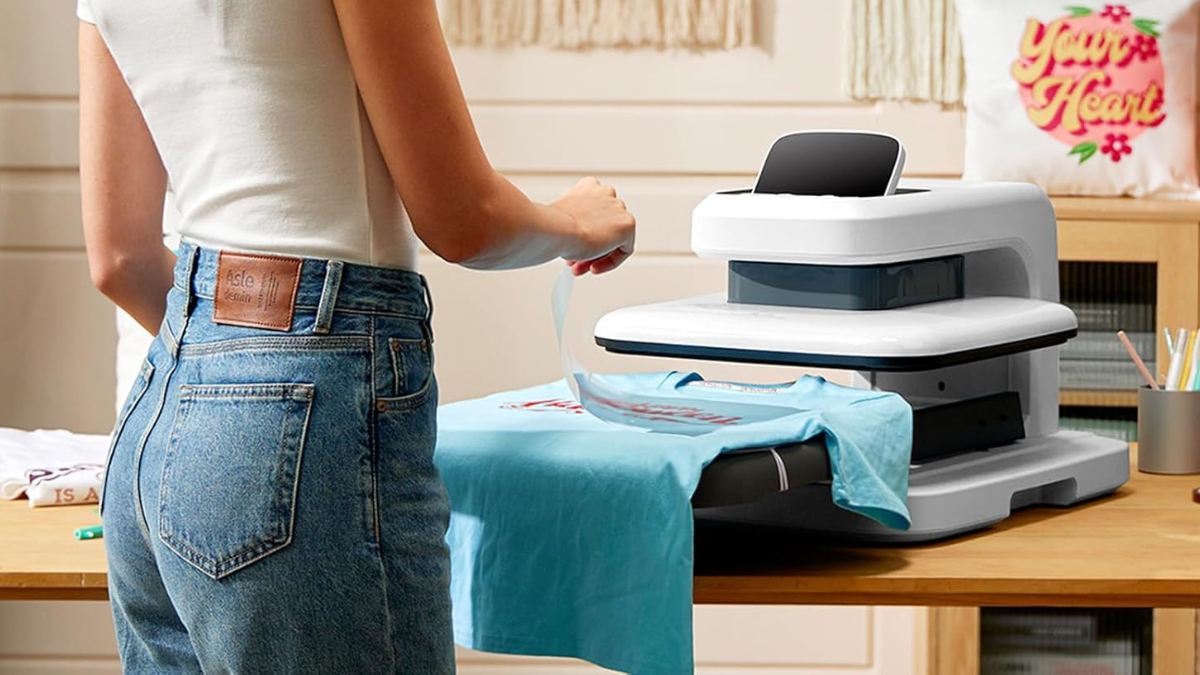
The defining feature of the HTVRONT Auto Heat Press is automation. Instead of wrestling with levers and knobs, you simply:
-
Pull out the sliding drawer.
-
Place your shirt, tote, pillow cover, or substrate on the platen.
-
Close the drawer and press start.
From that moment, the press automatically adjusts its pressure, applies heat, times the press, and releases when the cycle is complete. This hands-free approach minimizes mistakes, reduces fatigue, and frees you to prepare your next project while the current one is finishing.
Automation is even smarter — you can customize the exact temperature, time, and pressure settings, or choose from pre-programmed modes for common materials like HTV, sublimation, and DTF transfers.
Speed & Heat Consistency
Thanks to its dual-zone heating elements and advanced NTC (Negative Temperature Coefficient) sensors, the heat plate reaches 320 °F in as little as four minutes — about twice as fast as some manual models. This means you can start pressing almost immediately, reducing downtime.
Just as important, the temperature stays consistent across the entire 15″ × 15″ plate. Uneven heat can ruin transfers by leaving cold spots or scorched edges, but users consistently report vibrant, fully adhered designs with no patchiness or peeling.
Heat presses operate at temperatures that can cause serious burns, so safety features matter:
-
15-minute auto-off function: Shuts down the machine if inactive.
-
Multi-layer thermal insulation: Keeps the exterior cool to the touch.
-
Sliding drawer: Lets you load/unload materials away from the hot plate.
-
Upgraded auto-lift trigger (Auto Press 2): Prevents accidental contact when the cycle ends.
These protections make it suitable even in shared spaces like classrooms or studios.
Large Work Area for Versatility
The 15″ × 15″ platen gives you room for bigger designs — think oversized T-shirt graphics, tote bags, banners — or for pressing multiple smaller items at once. This not only speeds up production but also allows more creative freedom, since you’re not constrained to a small workspace.
Some users note that the pull-out drawer doesn’t extend 100% of the way, so you need to be mindful when placing thick or delicate items. However, the clearance is generally enough for most common materials.
Customizable Settings for Any Project
Adjustable pressure control, ranging from about 50 lb to 170 lb in 20-lb increments. This matters because different substrates require different force levels — for example, ceramic tiles need more pressure than thin cotton shirts.
You can choose:
-
Auto mode for completely hands-free pressing.
-
Preset modes for materials like HTV, sublimation, and DTF.
-
Custom modes where you store your favorite settings for repeat jobs.
Real-World Applications
To see the machine’s range, here are actual projects completed by crafters:
-
Sublimated Linen Napkins
-
Settings: 400 °F, 60 seconds, 50 lb pressure
-
Result: Crisp, vivid designs with no fading or ghosting. Perfect for wedding or holiday table décor.
-
Double-Sided Ceramic Ornaments
-
Settings: 400 °F, 180 seconds
-
Result: Even color saturation on both sides without flipping the piece mid-press.
-
HTV on Decorative Pillow Covers
-
Settings: 340 °F, 30 seconds, light pressure
-
Result: Smooth adhesion with no lifting, especially when cooled with a heat-safe block.
-
Mixed Material Batch
Pros & Cons
Advantages
-
True hands-free operation — reduces fatigue and improves workflow.
-
Fast heating and consistent temperature across the plate.
-
Multiple safety features — suitable for home, classroom, or shop use.
-
Large 15″ × 15″ workspace.
-
Adjustable pressure for more material compatibility.
-
Pre-programmed and custom modes for quick setup.
Drawbacks
-
Drawer doesn’t slide fully out — slightly less convenient for bulky items.
-
Pressure units are shown in pounds rather than PSI, which some pros may prefer.
-
Lighter build than industrial presses — though still stable for most home/business tasks.
Who Should Consider It
This is ideal for:
-
Home crafters who want simplicity without sacrificing quality.
-
Etsy sellers or small apparel brands producing moderate volumes.
-
Educators teaching design, entrepreneurship, or home economics.
-
Event organizers making custom merch for fundraisers or sports teams.
It’s less suited to industrial operations where presses run all day at maximum output — in those cases, a heavy-duty commercial model may be more appropriate.
Value for Money
With a retail price often around $236 (and sometimes on sale for less), offers a lot for the money. Comparable automated presses from bigger brands can cost double or triple that price. Given its automation, safety, and versatility, it’s an attractive option for anyone not ready to spend $500–$1,000.
Tips for Best Results
-
Pre-press your fabric for 5–10 seconds to remove moisture and wrinkles.
-
Use protective sheets (Teflon or parchment) to prevent ink transfer onto the platen.
-
For thick items, test different pressure settings to find the sweet spot.
-
Keep the platen clean — residue buildup can affect heat transfer quality.
Final Verdict
The HTVRONT Auto Heat Press isn’t just a gadget — it’s a genuine productivity booster. By eliminating manual adjustments and timing, it lets you focus on creativity rather than mechanics. For hobbyists, it lowers the barrier to entry; for small business owners, it improves efficiency without blowing the budget.
If you’ve been frustrated by inconsistent results, long heat-up times, or the physical strain of manual presses, this machine could transform your crafting workflow. It’s not perfect — no machine is — but it delivers professional-quality results with minimal learning curve, and that’s a win for makers at all levels.