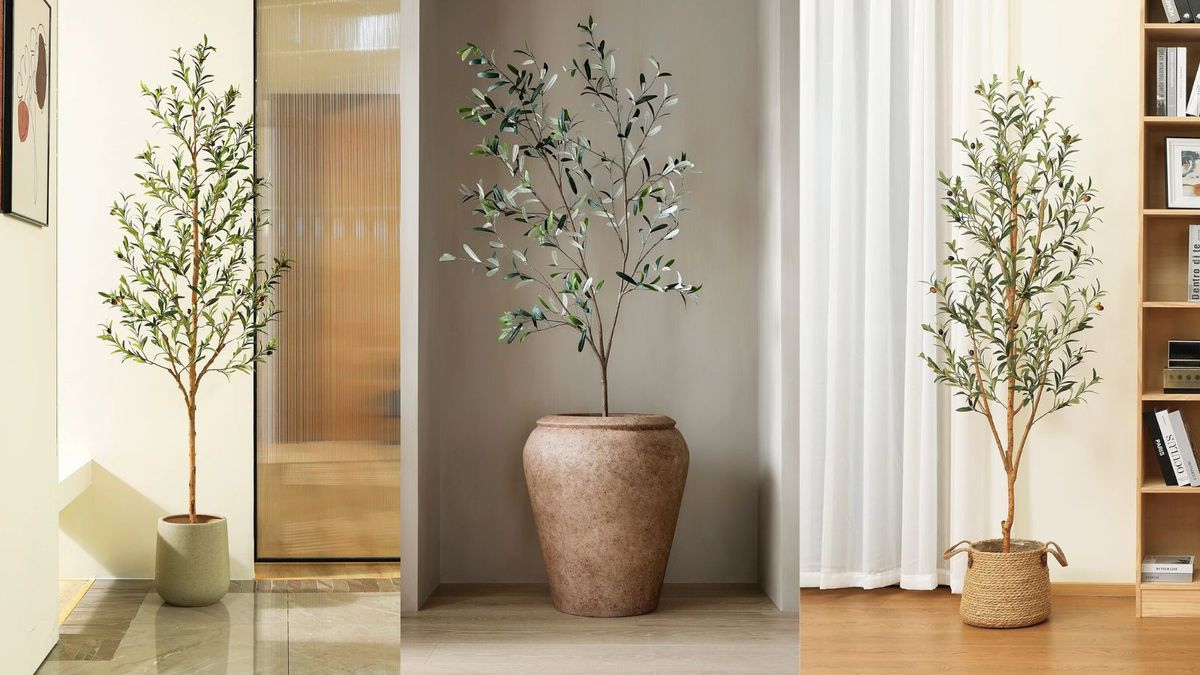
Few elements possess the quiet power of greenery. Plants breathe life into sterile corners, soften architectural lines, and evoke an organic calm that no man-made object can replicate. Yet, not every space or lifestyle can accommodate the care that live plants require. This is where NOVAROOT Artificial Olive Trees have transformed the design landscape — offering the beauty of nature without the demands of maintenance.
The artificial plant industry has evolved far beyond its humble beginnings. Gone are the days of shiny, plastic leaves and unrealistic colors. Today’s high-quality faux greenery, blurs the line between the natural and the crafted. Their artificial olive trees, in particular, capture not only the look but also the spirit of living trees — bringing Mediterranean grace into homes, offices, and commercial spaces around the world.
The Symbolism of the Olive Tree
For centuries, the olive tree has symbolized peace, resilience, and abundance. Its silvery-green leaves shimmer in the Mediterranean sun, and its slender branches twist with character and grace. From ancient Greek temples to modern minimalist interiors, the olive tree remains a timeless emblem of harmony.
However, growing a real olive tree indoors is notoriously difficult. It requires abundant sunlight, careful watering, and a mild climate — conditions not easily replicated in most homes. Offer the same aesthetic appeal without the challenge, allowing anyone to enjoy the serenity and symbolism of this iconic plant, regardless of where they live.
NOVAROOT’s Design Philosophy
It was founded with a simple but ambitious mission: to recreate the elegance of nature through precision design. Their team of botanically trained designers and artisans study real trees in their natural habitats to understand every nuance — from the irregularity of a branch to the matte texture of a leaf’s underside.
Each artificial olive tree begins as a study in realism. Designers sketch and sculpt branch structures inspired by real specimens, ensuring that every curvature and fork feels organic rather than mechanical. The trunks are hand-molded from natural wood and resin composites to achieve both authenticity and durability.
Unlike many mass-produced faux plants, These pieces are not symmetrical or overly perfect. A true olive tree grows with slight asymmetry — a charming irregularity that gives it character. Intentionally embraces these imperfections, ensuring that each tree looks natural from every angle.
Materials and Craftsmanship
The leaves are made from a proprietary blend of silk, latex, and fine polymer that captures the softness and color variation of real olive foliage. Each leaf is individually shaped and painted by hand, ensuring no two are identical.
The trunks are equally remarkable. Uses a mix of real wood branches and high-grade resin for reinforcement, giving each piece both stability and lifelike texture. The bark patterns are modeled on real olive wood, complete with subtle grooves, weathering marks, and color gradients that mimic natural aging.
Some premium models even incorporate UV-resistant coatings, making them suitable for both indoor and shaded outdoor environments. The attention to detail extends down to the base — weighted for stability and covered with preserved moss or decorative stones for a finished, natural look.
In every aspect, NOVAROOT’s craftsmanship reflects the philosophy of slow design — creating fewer, better pieces meant to last for years.
Effortless Elegance for Every Space
Available in a range of sizes — from compact tabletop models to towering 7-foot specimens — these trees complement almost any design style.
-
Minimalist interiors benefit from the tree’s organic form, which softens sharp lines and neutral palettes.
-
Rustic and farmhouse spaces gain a touch of Mediterranean warmth without the need for constant care.
-
Modern apartments use smaller NOVAROOT trees as statement pieces beside windows, reading chairs, or entryways.
-
Commercial spaces such as cafes, hotels, and studios incorporate them to add biophilic texture — the calming effect of nature in design.
Because artificial olive trees never shed leaves, require watering, or react to seasonal changes, they are ideal for areas where live plants would struggle — dark corners, air-conditioned rooms, or high-traffic lobbies.
The Rise of “Low-Maintenance Luxury”
Interior design has been shifting toward what experts call low-maintenance luxury — a lifestyle that values beauty, comfort, and sustainability without constant upkeep. These are a perfect example.
Unlike real plants, which can wilt, attract pests, or die unexpectedly, artificial olive trees remain pristine. This predictability allows designers to create lasting arrangements with confidence. For homeowners, it means enjoying the peaceful look of greenery without adding another task to their daily routine.
Moreover, the sustainability argument for high-quality artificial plants is gaining ground. While cheap, disposable faux plants contribute to waste, premium designs like NOVAROOT’s are made to endure for years, reducing replacement frequency. They’re a long-term investment in both aesthetics and practicality.
One of the delights of owning is its adaptability. It pairs beautifully with nearly every design theme:
-
Mediterranean Modern: Combine a tall olive tree with whitewashed walls, linen curtains, and clay pots for a sunlit, coastal feel.
-
Japandi Minimalism: Place a slim olive tree in a textured stone planter beside low furniture to achieve serene balance.
-
Bohemian Chic: Surround the tree with woven baskets, patterned rugs, and layered textiles for a natural, eclectic vibe.
-
Urban Contemporary: Use two symmetrical trees flanking a console table or entryway to create structure and sophistication.
For best results, designers recommend choosing a planter that complements the tree’s texture. A matte ceramic or terracotta pot enhances authenticity, while a sleek metallic planter gives it a modern twist.
Lighting also plays a role: a soft, warm spotlight from below can make the tree’s branches cast gentle, lifelike shadows, enhancing realism even further.
Maintenance Made Easy
A little care helps them stay flawless. Occasional dusting with a microfiber cloth or a quick spray of compressed air keeps leaves fresh and vibrant. For deeper cleaning, a damp cloth or silk-safe cleaner restores the natural sheen.
Thanks to their durable materials, retain color and structure even after years of display. In commercial settings — where plants must always look impeccable — this durability becomes a major advantage.
The Emotional Impact of Artificial Greenery
It’s easy to underestimate how profoundly greenery affects mood. Studies in environmental psychology show that even simulated nature can reduce stress and improve concentration. A well-placed artificial olive tree can therefore do more than beautify a space — it can improve the way people feel within it.
The olive tree’s shape, with its airy canopy and gentle leaves, creates a sense of openness. Its soft, neutral tones blend seamlessly with any color palette, contributing to the visual calm that every designer seeks to achieve.
In a fast-paced world, this kind of tranquility is not a luxury — it’s a necessity. They understands that interior design isn’t just about appearance; it’s about atmosphere.
The Future of Artificial Plant Design
NOVAROOT continues to innovate, experimenting with biodegradable materials, 3D printing, and smart-textile foliage that subtly adjusts color under different lighting. Their upcoming collections promise to blur the line between real and artificial even further — not as imitation, but as evolution.
In this new era of design, artificial plants are no longer “faux.” They’re an art form — a collaboration between nature’s inspiration and human creativity.
Conclusion
Represents more than a decorative trend — it embodies a modern philosophy: timeless beauty, minimal effort, and enduring quality. Its graceful branches remind us of nature’s elegance, while its permanence speaks to our desire for balance in a transient world.
Whether it stands in a living room, a boutique, or a sunlit hallway, offers what every great design element should: a sense of calm, continuity, and quiet sophistication.
In an age where true craftsmanship and sustainability are finally converging, rooted not in soil, but in artistry.