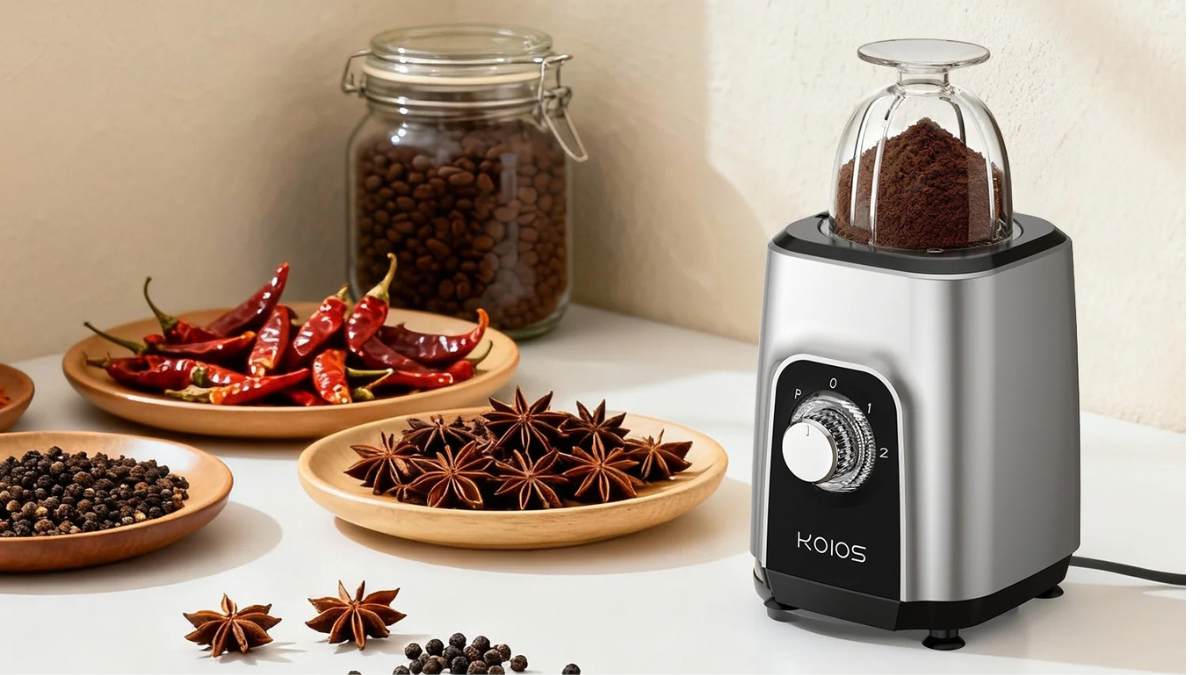
A food processor is a valuable kitchen appliance that helps simplify food preparation and reduce the time spent cooking. From chopping vegetables and mincing meat to preparing sauces and grinding ingredients, this appliance can make everyday kitchen tasks easier. The KOIOS Food Processor is one option for households looking for a convenient and versatile food preparation tool. With different models offering various capacities, motor powers, and accessories, they provides options for people who want to improve their cooking experience.
What Is a KOIOS Food Processor?
This is an electric kitchen appliance designed to help users prepare ingredients quickly and efficiently. Depending on the model, it may include chopping bowls, stainless-steel blades, multiple speed settings, and accessories for different food preparation tasks.
These are designed primarily for chopping and mincing, while others combine food processing with blending or grinding functions. These appliances are useful for preparing ingredients for soups, salads, sauces, meat dishes, and other homemade meals.
The exact specifications vary by model, so buyers should check the product description carefully before making a purchase.
Key Features of the KOIOS Food Processor
1. Powerful Motor
Motor power is an important factor when choosing a food processor. Certain KOIOS models advertise motors with different wattage ratings, including 500-watt and higher-powered options. A motor with suitable power can help process ingredients more efficiently.
A food processor with a lower wattage may be adequate for chopping onions, garlic, herbs, and soft vegetables. Higher-powered models may offer greater versatility for demanding tasks, depending on their blade design and manufacturer recommendations.
However, wattage alone does not determine performance. Bowl design, blade quality, operating time, and the type of ingredients also affect the results.
These are commonly used in food processors because they are durable and suitable for many food preparation tasks. Depending on the model, the blades may help chop vegetables, mince meat, crush certain ingredients, or prepare mixtures.
Sharp blades can produce consistent results when the bowl is not overloaded and the appliance is operated according to its instructions. Users should handle the blades carefully during assembly, cleaning, and storage because they can cause cuts.
3. Convenient Bowl Capacity
Bowl capacity determines how much food can be processed at one time. Some KOIOS choppers are advertised with bowls suitable for household food preparation, while other models may offer different container sizes.
A larger bowl can be helpful when preparing ingredients for family meals. A smaller bowl may be more convenient for chopping garlic, herbs, nuts, or other small quantities.
Buyers should distinguish between the advertised bowl capacity and the practical amount of food that can be processed effectively in one batch.
4. Multiple Speed Settings
Some models offer more than one speed setting or a pulse function. These controls allow users to adjust processing according to the ingredients and desired texture.
A short pulse may be useful for roughly chopping onions or herbs. Longer processing may be suitable for producing finer pieces, although the appliance should not be operated continuously beyond the recommended duration.
Following the manufacturer’s instructions helps prevent overheating and improves the consistency of the finished ingredients.
One major benefit of a food processor is the time it can save during meal preparation. Chopping vegetables manually can take several minutes, especially when preparing large quantities. An electric processor can complete many of these tasks more quickly.
Another advantage is convenience. Users can prepare ingredients for sauces, dips, marinades, fillings, and other recipes without relying entirely on manual chopping. This can be particularly useful for busy households and people who cook frequently.
A food processor may also help achieve more consistent ingredient sizes. Although the results depend on the food, blade arrangement, and processing technique, consistent chopping can improve the appearance and texture of many dishes.
The appliance can encourage home cooking by making preparation tasks less demanding. Preparing ingredients at home also allows users to control the freshness, seasoning, and composition of their meals.
Finally, compact food choppers can be convenient for kitchens with limited counter space. However, buyers should check the appliance’s dimensions and storage requirements before purchasing.
Common Uses in Everyday Cooking
Chopping vegetables: Onions, carrots, celery, and other suitable vegetables can be chopped for soups, stews, stir-fries, and sauces.
Mincing garlic and herbs: Small quantities of garlic, ginger, and herbs can be processed for marinades, dressings, and seasoning mixtures.
Preparing sauces and dips: Certain models can help prepare salsa, pesto, and similar mixtures when their instructions permit processing these ingredients.
Mincing meat: Models specifically designed and approved for meat processing may be used to mince boneless meat cut into suitable pieces. Meat should be handled hygienically and processed according to the manufacturer’s guidance.
Grinding selected ingredients: Some models can process particular nuts or dry ingredients, but not every food processor is suitable for grinding hard or dry foods. Users should confirm compatibility before attempting these tasks.
Preparing recipe ingredients: A food processor can help prepare ingredients for meatballs, patties, fillings, and selected homemade snacks.
It is important to remember that a food processor is not automatically a substitute for a blender, stand mixer, or specialized grinder. Its capabilities depend on the model and included accessories.
How to Use the KOIOS Food Processor Properly
Using the appliance correctly can improve results and extend its service life.
First, place the processor on a stable, dry surface. Ensure that the power cord and plug are undamaged and that the appliance is assembled according to the instructions.
Next, prepare the ingredients. Wash vegetables and fruits, remove unwanted parts, and cut large ingredients into smaller pieces when necessary. Remove bones from meat and follow the manufacturer’s recommendations for suitable ingredients.
Place the ingredients inside the bowl without exceeding the recommended fill level. Secure the lid and other safety components before operating the machine.
Select the appropriate speed or pulse setting, if available. Begin with short processing intervals when the desired texture is uncertain. Stop the machine and inspect the ingredients before continuing.
Always disconnect the appliance from the power supply before removing the blade, clearing a blockage, or cleaning the components.
Cleaning and Maintenance
Regular cleaning is essential for food safety and appliance longevity. After use, unplug the processor and disassemble the removable components according to the manual.
Wash the bowl, lid, and other washable accessories with warm water and dishwashing liquid if the manufacturer permits it. Use a brush or sponge to remove food residue, taking care around sharp blades.
Never immerse the motor base, electrical plug, or power cord in water. Wipe the motor housing with a slightly damp cloth and dry it thoroughly.
Allow all components to dry before reassembling or storing them. Check the blades, lid, bowl, and electrical cord periodically for signs of damage.
Avoid forcing hard ingredients into the machine or operating it continuously beyond the recommended period. Proper maintenance can help preserve performance and reduce the risk of avoidable damage.
Potential Limitations
Although a food processor offers convenience, it may have limitations. Small bowls can require several batches when preparing food for a large family. Some ingredients may also become unevenly chopped if the bowl is overloaded or the machine is operated for too long.
Noise is another consideration because electric food processors produce sound while running. Blade assemblies also require careful handling, and certain components may need handwashing.
Availability of replacement parts, warranty coverage, and after-sales service can vary by seller and location. Buyers in the Philippines should confirm whether the product has an appropriate power rating, a compatible plug, accessible replacement parts, and a clear return policy.
Imported appliances may also involve additional shipping costs or longer delivery times. It is wise to consider the total purchase cost rather than focusing only on the advertised price.
Buying Guide: Is the KOIOS Food Processor Right for You?
If you mainly prepare vegetables, herbs, and small quantities of ingredients, a compact chopper may be sufficient. If you frequently cook for a family or want to process larger quantities, examine the bowl capacity and recommended batch sizes.
Compare the motor rating, blade configuration, available accessories, and supported functions. Read customer reviews carefully, paying attention to recurring comments about durability, ease of cleaning, processing consistency, and customer service.
It is also important to purchase from a reputable seller and review the warranty terms. Confirm whether the listed price includes shipping and whether the seller provides support if the appliance arrives damaged or develops a fault.
Conclusion
The KOIOS Food Processor can be a useful kitchen appliance for people who want to simplify everyday food preparation. Depending on the model, it may help chop vegetables, mince suitable ingredients, prepare sauces, and complete other basic kitchen tasks.
Its potential advantages include convenience, faster preparation, and reduced manual effort. However, performance depends on the specific model, ingredient type, bowl capacity, and proper operating technique.