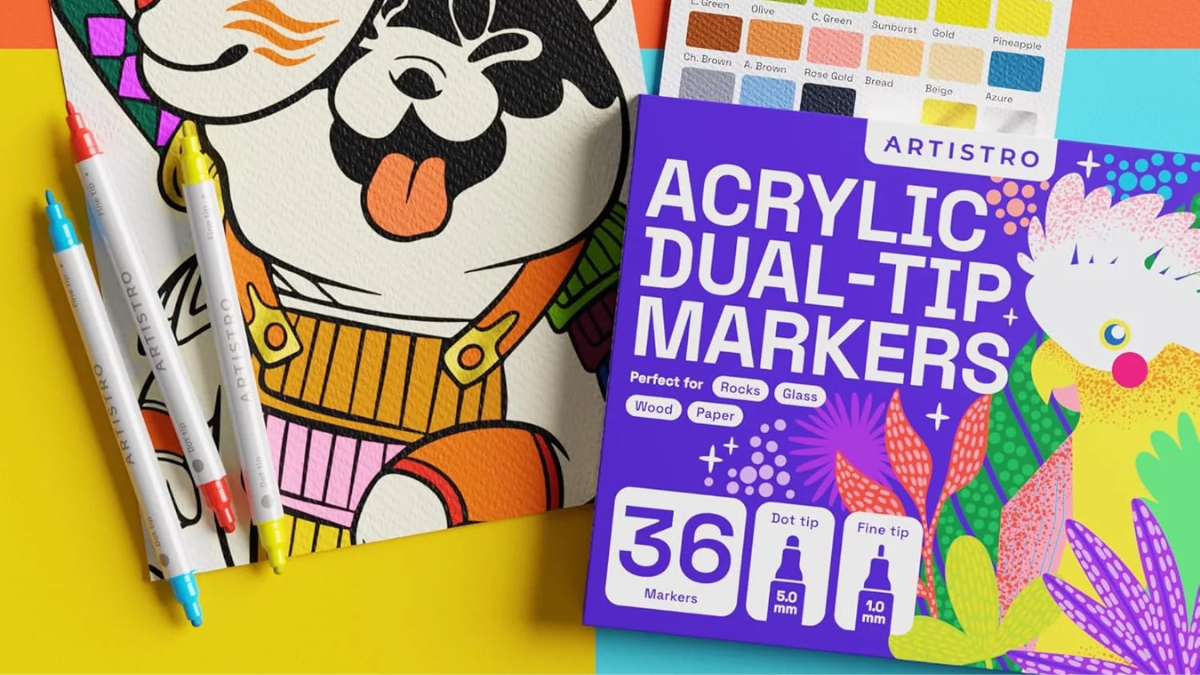
For artists, students, hobbyists, and creative enthusiasts, the right set of markers can turn a simple idea into a colorful finished project. ARTISTRO Marker Pens are designed to give creators an accessible way to explore drawing, coloring, lettering, illustration, and a wide range of craft projects. With different marker types, tip styles, and color selections available, they offers tools for both beginners experimenting with art and experienced creators developing detailed work.
Markers are popular because they are convenient. Unlike traditional paints, they do not always require brushes, palettes, or extensive preparation. A marker can be picked up and used immediately, making it an especially practical medium for sketching and everyday creativity.
A Versatile Tool for Creative Projects
One of the biggest advantages of marker pens is their versatility. A single collection can be used for coloring books, illustrations, greeting cards, posters, journaling, lettering, crafts, and decorative projects.
ARTISTRO’s marker range includes products designed for different creative purposes. The brand offers paint markers, acrylic markers, watercolor markers, and other marker sets, allowing users to choose a type based on the surface and artistic effect they want to achieve.
This variety is useful because different projects require different characteristics. Someone creating a colorful illustration on paper may want a different marker from someone decorating glass, wood, stone, ceramics, or other surfaces.
Exploring Color Through Markers
Color is at the heart of marker-based art. A large selection of shades can make it easier to experiment with combinations, create contrast, and add depth to illustrations.
Bright colors can bring energy to playful drawings and craft projects, while muted tones can create a softer aesthetic. Darker shades can be used for outlines, shadows, and contrast.
For beginners, working with a broad color palette can also be an enjoyable way to learn basic color relationships. Complementary colors can create visual contrast, while related shades can produce harmonious compositions.
Markers make experimentation relatively simple. You can test combinations on scrap paper before incorporating them into a finished illustration.
These are particularly interesting for creators who want to work beyond traditional paper. Acrylic paint markers can be used on a variety of surfaces, depending on the specific product and surface preparation.
They offers acrylic marker sets intended for creative projects involving surfaces such as wood, glass, rocks, ceramics, and other materials. The brand describes its acrylic markers as suitable for applications ranging from rock painting and crafts to decorative artwork.
This opens up a much wider world of creativity.
A plain stone can become a miniature painting. A wooden object can be transformed with colorful patterns. Glassware can be decorated with artwork. Craft projects can gain personalized details without requiring conventional paintbrushes.
For anyone interested in DIY projects, this flexibility can make acrylic markers particularly appealing.
Painting Without Traditional Brushes
One reason paint markers are popular is their convenience. Traditional painting generally involves paint, brushes, water, palettes, and cleanup. Paint markers combine the pigment and applicator into one tool.
This does not mean they replace traditional painting in every situation, but they can make certain projects much more approachable.
For quick decorations or small details, a marker can offer greater control than a large brush. Fine tips can help create outlines, lettering, patterns, and intricate details, while broader tips can cover larger areas.
This makes markers useful for both decorative and functional creative projects.
It can also be used for drawing and illustration. Artists can create simple sketches, colorful characters, decorative illustrations, patterns, and more detailed artwork.
Markers are especially useful when bold color is part of the artistic style. They can produce strong lines and saturated areas of color, depending on the marker type, paper, and technique.
One approach is to begin with a light sketch and gradually build up color. Another is to use markers directly for a more spontaneous style.
Artists can also combine marker work with pencils, pens, or other media. For example, a pencil can establish the initial composition, while markers add color and visual emphasis.
Lettering and Journaling
Creative lettering is another area where markers can shine. Hand lettering, bullet journaling, greeting cards, invitations, and decorative notes can all benefit from colorful marker work.
Different tip shapes can produce different line widths. A fine tip can be useful for small writing and details, while a broader or brush-style tip can create expressive lettering.
For beginners learning hand lettering, markers can provide an approachable starting point. Practicing basic strokes, spacing, and letter forms with different colors can make the learning process more enjoyable.
Journaling can also become more visually engaging when headings, borders, illustrations, and important notes are highlighted with color.
Choosing the Right Marker
For paper-based drawing and coloring, look for markers designed specifically for paper and illustration.
For decorative crafts, acrylic or paint markers may provide more flexibility, particularly when working on non-porous surfaces.
For lettering, consider the tip style and line width. Fine tips are useful for precision, while brush or broader tips may be better for expressive lettering.
For mixed-media projects, think about how the marker will interact with the other materials. Test the combination on a small area first to understand drying time, coverage, and possible bleeding.
The surface matters just as much as the marker. A product that performs well on paper may behave differently on glass, wood, ceramic, or stone.
Good results often depend on technique as much as the marker itself.
Start by choosing an appropriate surface. For paper projects, the thickness and texture of the paper can affect how the ink or paint behaves.
Allow layers to dry when necessary. Applying too much material too quickly can lead to smudging or uneven coverage.
Practice pressure control as well. A lighter touch can create thinner marks, while increased pressure may produce broader or stronger lines, depending on the tip.
It is also useful to test unfamiliar surfaces before beginning a major project. A small test area can reveal whether the marker adheres properly, how quickly it dries, and whether the finished color matches expectations.
Finally, store markers properly and keep their caps securely closed. This helps protect the tips and reduce the possibility of drying out.
A Tool for Beginners and Experienced Creators
It can appeal to a wide range of users because they do not require extensive artistic equipment.
For beginners, markers offer an easy way to start creating. There is no need to master complicated painting techniques before producing colorful artwork.
For experienced artists, markers can become another medium within a larger creative toolkit. They can be used for outlining, detailing, coloring, decorative accents, or mixed-media compositions.
Teachers and parents may also find markers useful for creative activities because they can support drawing and craft projects in a relatively straightforward format.
Creativity Beyond the Sketchbook
Perhaps the most exciting aspect of paint and acrylic markers is the ability to take creativity beyond ordinary paper.
Decorating stones can become a relaxing hobby. Personalized wooden signs can add character to a home. Handmade cards can become more expressive with colorful lettering and illustrations. Seasonal decorations can be customized rather than purchased ready-made.
These projects also demonstrate that art does not need to be confined to a formal studio. A kitchen table, craft corner, classroom, or outdoor workspace can become a place for creative experimentation.
Final Thoughts
ARTISTRO Marker Pens offer a versatile way to explore color and creativity across a variety of artistic and craft projects. From drawing and coloring to lettering, journaling, rock painting, and surface decoration, different marker types can help creators approach projects with greater convenience and flexibility.
The key is choosing the right marker for the intended surface and artistic goal. Fine tips can provide precision, broader tips can help with coverage, and paint-based markers can open up possibilities beyond traditional paper.
Whether you are picking up markers for the first time or adding another medium to an established art collection, they provides a range of options worth exploring.