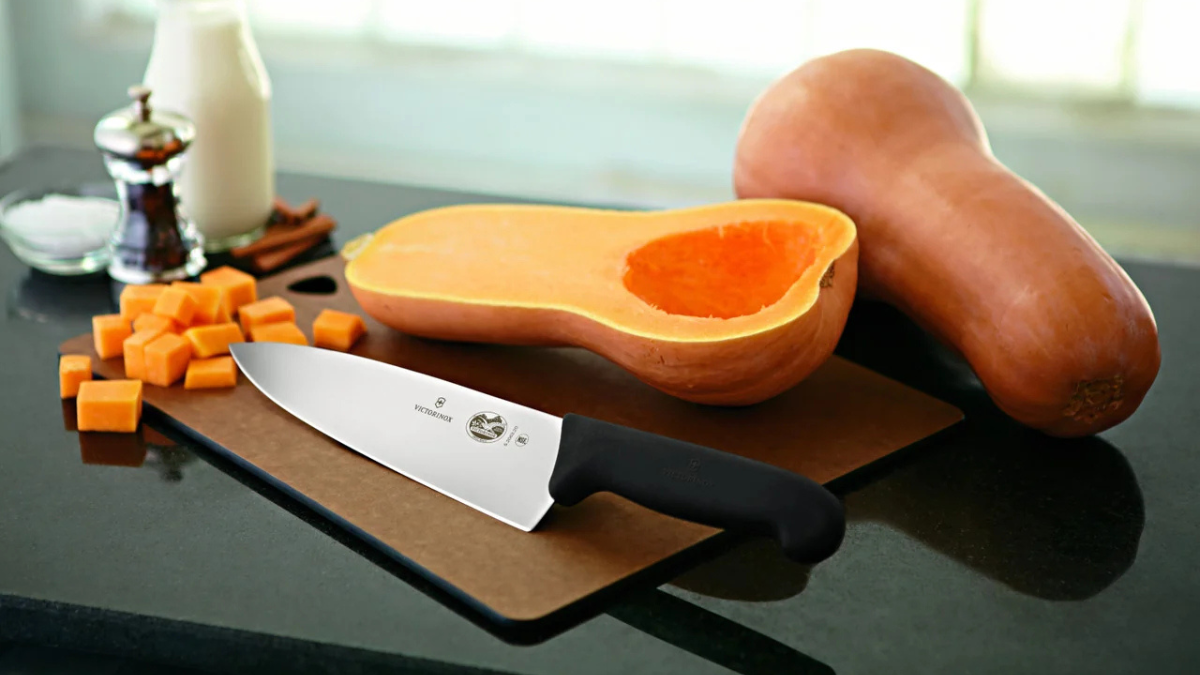
A reliable chef’s knife is one of the most important tools in any kitchen. Whether preparing vegetables, slicing meat, chopping herbs, or mincing garlic, a good knife can make everyday cooking more efficient and enjoyable. Among the many kitchen knife brands available, Victorinox has earned a strong reputation for producing practical, durable, and reasonably priced cutting tools.
This is particularly popular among home cooks, culinary students, and professional kitchen workers who want dependable performance without necessarily paying premium prices for luxury cutlery. Known for its sharp stainless steel blade, comfortable handle, and versatile design, this knife can handle a wide variety of food preparation tasks.
A Swiss company best known for its Swiss Army knives, but it also manufactures kitchen knives, professional cutlery, and other practical tools. Its kitchen knife collection includes chef’s knives designed for everyday food preparation.
The Victorinox Fibrox Pro Chef’s Knife is one of the brand’s best-known kitchen models. It is valued for its functional design, stainless steel blade, and textured handle that provides a secure grip during ordinary kitchen work.
Victorinox also offers chef’s knives in different product lines, including models with different handle materials and blade configurations. Available blade lengths vary by model, with common options around 6, 8, and 10 inches.
The 8-inch chef’s knife is a popular all-purpose choice because it provides a useful balance between cutting capacity and maneuverability. Smaller versions may be easier to control for users with smaller hands, while longer blades can be useful for larger ingredients.
Key Features of the Victorinox Chef’s Knife
1. Sharp Stainless Steel Blade
One of the most important characteristics of a chef’s knife is its blade. Generally use stainless steel selected to provide useful cutting performance, corrosion resistance, and practical maintenance.
A sharp blade can cut through vegetables, fruits, boneless meat, and many other ingredients with less effort than a dull knife. It also allows cooks to make cleaner cuts, which can improve the consistency and appearance of prepared food.
The blade’s shape is designed to support a range of cutting techniques. Depending on the model, the curved edge can accommodate a rocking motion, while the relatively straight portions of the edge can be useful for controlled chopping.
Although stainless steel offers good resistance to corrosion, it is not completely immune to staining or damage. Cleaning and drying the knife after use helps preserve its condition.
2. Comfortable and Secure Handle
A comfortable handle can help users maintain better control when chopping vegetables or slicing meat. The textured surface is especially useful in a busy kitchen where hands may occasionally become damp.
Other Victorinox knife models use different handle materials, including wood or alternative synthetic finishes. These designs may appeal to users who prioritize appearance or prefer a particular grip shape.
The best handle ultimately depends on hand size, grip style, and personal comfort. Whenever possible, buyers should hold a knife before purchasing it to assess its balance and feel.
3. Lightweight Construction
These are relatively lightweight compared with some heavier, traditional European-style knives.
This construction can make repetitive cutting tasks more comfortable for users who prefer a knife that is easy to maneuver. A lighter knife may also feel less tiring during extended meal preparation, although comfort varies between individuals.
Lightweight construction does not automatically mean that a knife is less capable. Blade geometry, sharpness, balance, and technique are equally important in determining cutting performance.
Some cooks prefer heavier knives because they appreciate the feeling of momentum during chopping. For these users, comparing different knife styles before buying is worthwhile.
This is intended to perform multiple tasks, reducing the need to switch constantly between specialized tools.
They can be used to chop onions, slice tomatoes, dice carrots, mince herbs, and cut boneless meat. It can also help prepare ingredients such as cabbage, potatoes, and bell peppers.
The curved edge of many chef’s knives supports a rocking motion, while the blade’s length provides enough cutting surface for larger ingredients.
However, a chef’s knife is not suitable for every task. Heavy bones, frozen food, and very hard materials can damage the blade. A cleaver, boning knife, or specialized tool is more appropriate when a particular task requires one.
5. Practical and Accessible Pricing
They has become well known for offering functional kitchen knives at prices that are often accessible to home cooks and culinary students.
Compared with some premium Japanese or handcrafted European knives, these are positioned as practical everyday tools rather than luxury purchases.
This value proposition makes the brand attractive to people building their first kitchen or replacing an older knife. However, prices vary according to the model, blade length, seller, and country.
Buyers should compare the exact model and purchase it from a reputable retailer to reduce the risk of receiving counterfeit or misrepresented products.
Benefits of Using a Victorinox Chef’s Knife
Improved Food Preparation
It can make ingredient preparation faster and more consistent. Chopping vegetables, slicing meat, and mincing herbs may require fewer repeated movements when the blade is properly maintained.
This can make a noticeable difference for people who cook regularly at home or prepare large quantities of ingredients.
Suitable for Beginners and Experienced Cooks
The knives appeal to a broad range of users because they focus on practical performance rather than complicated features.
Beginners can use one knife for many everyday cooking tasks, while experienced cooks may appreciate having a dependable blade for routine preparation.
The knife still requires proper technique. Learning how to guide ingredients safely, keep fingertips tucked away from the blade, and use a stable cutting board is essential.
Easy Everyday Maintenance
Stainless steel construction and practical handle materials can make many Victorinox models relatively straightforward to maintain.
Regular cleaning, careful drying, and appropriate storage help keep the knife in good condition. Depending on the model, the manufacturer may provide specific instructions concerning cleaning and dishwasher use.
Even when a knife is marketed as dishwasher-safe, handwashing is generally preferable for preserving sharpness and minimizing accidental damage from contact with other utensils.
Good Value for Money
For many buyers, the combination of dependable cutting performance, practical design, and accessible pricing makes Victorinox an appealing choice.
A well-maintained chef’s knife can remain useful for years, although its lifespan depends on frequency of use, storage, sharpening, and general care.
How to Maintain a Victorinox Chef’s Knife
Proper maintenance helps preserve cutting performance and extend the knife’s useful life.
First, wash the blade with warm water and mild dish soap after use. Rinse it thoroughly and dry it with a clean towel to reduce the risk of staining and corrosion.
Second, use a suitable cutting surface. Wooden and quality plastic cutting boards are generally preferable to glass, stone, ceramic, or metal surfaces, which can dull a blade more quickly.
Third, sharpen the knife when it begins to lose its cutting ability. A whetstone, suitable sharpening system, or professional sharpening service can help restore the edge. A honing tool may help maintain edge alignment between sharpening sessions, depending on the blade and tool used.
Finally, store the knife safely in a knife block, blade guard, or suitable magnetic holder. Avoid leaving it loose in a drawer, where the edge may become damaged and create a safety hazard.
Safety Considerations
Even a high-quality chef’s knife can cause serious injury if used incorrectly. Always work on a stable cutting board and keep the blade pointed away from your body whenever practical.
Use a controlled cutting motion rather than forcing the blade through hard ingredients. Keep fingertips curled away from the cutting edge and hold ingredients securely without placing fingers in the blade’s path.
Never try to catch a falling knife. Instead, move away and allow it to fall safely. When carrying the knife, keep the blade pointed downward and close to your side.
A sharp knife is generally easier to control than a dull one because it requires less force, but safe technique remains essential.
Limitations to Consider
Some users prefer heavier knives with a more substantial feel. Others may prefer the edge characteristics or specialized geometry of premium Japanese knives. These preferences do not necessarily indicate that one design is universally better; they reflect differences in cutting style and personal expectations.
The synthetic handle on the Fibrox Pro line may also be less visually appealing to people who prefer traditional wooden handles. Conversely, wooden handles may require additional care depending on their finish and the manufacturer’s instructions.
Finally, even a durable stainless steel blade requires sharpening and responsible storage. No kitchen knife stays sharp indefinitely, and cutting performance will gradually decline without maintenance.
Is the Victorinox Chef’s Knife Worth Buying?
This is worth considering for home cooks, students, and professionals who want a versatile kitchen tool with practical features and a reputation for value.
Its strengths include a useful all-purpose blade shape, comfortable handle options, relatively lightweight construction, and straightforward maintenance. These characteristics make it suitable for a wide range of everyday food preparation tasks.
Before buying, consumers should choose an appropriate blade length, compare handle styles, and confirm the exact product line. Those who prefer a heavier knife or a specialized cutting experience may want to compare alternatives before making a decision.
Conclusion
The Victorinox Chef’s Knife remains a compelling option for people seeking a dependable and versatile kitchen cutting tool. Its stainless steel blade, practical handle designs, and suitability for everyday food preparation make it useful in kitchens ranging from small apartments to professional cooking environments.
With proper technique and regular maintenance, the knife can handle many common tasks, including chopping vegetables, slicing meat, and preparing herbs. Its accessible pricing also makes it an attractive option for cooks who want reliable performance without investing in expensive specialty cutlery.