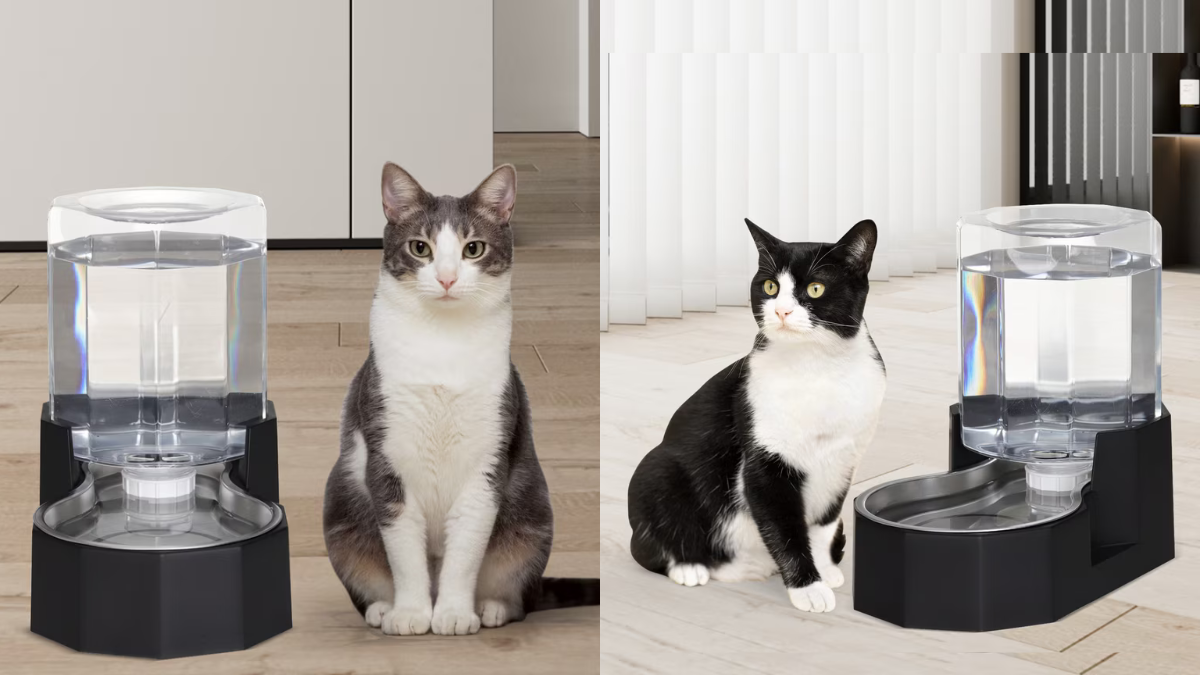
Providing clean and accessible drinking water is an important part of caring for a cat. Some cats drink very little from ordinary bowls, while others prefer moving or circulating water. A cat water dispenser can offer a convenient alternative by keeping water available throughout the day and, depending on the design, encouraging pets to drink more regularly.
The RIZZARI Cat Water Dispenser is designed as a pet-friendly water station intended to make hydration more convenient for cats and their owners. Depending on the specific model, features can include a generous water reservoir, circulating water, filtration, a quiet pump, and a design intended to reduce the need for frequent refilling.
What Is the RIZZARI Cat Water Dispenser?
This is an automatic or circulating water fountain designed primarily for cats. Rather than leaving water in a conventional stationary bowl, the dispenser uses a reservoir and pump to circulate water through the drinking area.
Moving water can be appealing to some cats because it is visually and physically different from stagnant water in a traditional bowl. The continuous circulation can also help keep water moving through the filtration system when the model includes a replaceable filter.
The exact design varies between models, so owners should check the product specifications for details such as capacity, filtration, power source, and operating modes.
Why Cats May Prefer Moving Water
Cats have individual drinking preferences. Some are perfectly comfortable drinking from a regular bowl, while others show greater interest in fountains or running taps.
A circulating water dispenser can make drinking more engaging for cats that prefer moving water. The flowing stream can attract attention and encourage a pet to investigate the drinking station.
However, there is no guarantee that every cat will prefer a fountain. Some cats may need time to become comfortable with the new device, particularly if they are accustomed to a quiet, stationary bowl.
Introducing the dispenser gradually can help. Owners can initially place it near the cat’s normal water bowl and allow the animal to investigate it without pressure.
Water Capacity
One of the most useful features of an automatic cat water dispenser is its reservoir capacity. A larger tank means owners do not need to refill the unit as frequently.
This can be particularly convenient for people who work long hours or have multiple cats. The amount of water a household needs will depend on the number of pets, their size, diet, temperature, and individual drinking habits.
A larger reservoir does not eliminate the need for monitoring, however. Fresh water should still be provided regularly, and the dispenser should be cleaned according to the manufacturer’s instructions.
Filtration System
Many automatic pet fountains use filters to help remove particles, debris, and certain impurities from circulating water. Depending on the model, a filtration system may include activated carbon and other filter materials.
A filter can help reduce unpleasant odors and improve the overall freshness of the water. It can also catch some debris before it reaches the pump or drinking area.
However, a filter is not a substitute for regular cleaning. Hair, food particles, dust, and other contaminants can still accumulate inside the reservoir and pump.
Owners should replace filters according to the manufacturer’s recommended schedule and clean the fountain regularly.
Quiet Pump Operation
Noise is an important consideration for a pet water fountain. Cats can be sensitive to unfamiliar sounds, and a loud pump may discourage some animals from using the dispenser.
A quiet pump can make the fountain less intrusive in the home while providing continuous circulation.
Owners should also make sure the reservoir contains enough water to keep the pump properly submerged if the model requires this. Operating a pump without sufficient water can increase noise and may damage the device.
The exact noise level depends on the model, water level, pump condition, and placement.
Encouraging Better Hydration
One of the potential advantages of a cat fountain is that it may encourage a pet to drink more often. Adequate hydration is an important part of general pet care.
Cats that eat primarily dry food may obtain less water from their diet than cats that consume wet food. Providing an appealing source of fresh drinking water can therefore be helpful.
Still, a water fountain should not be treated as a medical solution for dehydration or urinary problems. If a cat suddenly drinks much more or much less than usual, owners should consult a veterinarian.
Easy Access for Cats
A well-designed water dispenser should provide comfortable access to the water. The drinking area should be positioned at a suitable height and be easy for the cat to reach.
The fountain should also be placed on a stable, level surface where it is unlikely to tip over.
Owners should consider the location carefully. A quiet area away from litter boxes and food may encourage more comfortable drinking. Some cats also prefer water to be separated from their food.
Cleaning and Maintenance
Regular cleaning is one of the most important responsibilities associated with an automatic water fountain.
Although circulating water can be convenient, the fountain still contains surfaces where bacteria, slime, hair, and mineral deposits can accumulate. The reservoir, drinking tray, pump, and other removable components should be cleaned according to the manufacturer’s recommendations.
Filters should also be replaced regularly. A dirty filter can reduce water quality and restrict water flow.
Hard-water areas may require more frequent cleaning because mineral deposits can build up around the pump and water channels.
Before cleaning, the dispenser should be unplugged if it uses an electrical connection. Electrical components should be handled according to the manufacturer’s instructions and should not be submerged unless specifically designed for it.
Benefits of the RIZZARI Cat Water Dispenser
Convenient Water Access
The dispenser provides a dedicated drinking station where cats can access water throughout the day.
Circulating Water
Moving water can be more attractive to some cats than still water in a traditional bowl.
Filtration
Compatible models may use filtration to help keep circulating water cleaner and fresher.
Reduced Refilling Frequency
A larger reservoir can reduce the number of times owners need to refill the water station.
Potentially Quiet Operation
A quiet pump can make the fountain less disruptive to cats and humans.
Convenience for Multiple-Cat Homes
Households with several cats may appreciate having a larger dedicated water source, although owners should still provide enough water stations for their pets’ individual preferences.
Potential Drawbacks
There are also some limitations to consider.
The first is maintenance. Unlike a basic bowl, a fountain contains mechanical and filtration components that require regular cleaning.
Another consideration is electricity. Models that use a powered pump need to remain connected to a power source or have their batteries charged, depending on the design.
Replacement filters are also an ongoing expense. Owners should check the availability and cost of compatible replacement filters before purchasing.
Some cats may also be hesitant to use the fountain at first. A new pump sound, moving water, or unfamiliar design can make a cautious cat reluctant to drink from it.
Finally, the exact features and capacity vary between RIZZARI models, so buyers should examine the specific product rather than relying solely on the general brand name.
How to Introduce the Fountain to a Cat
Cats can be creatures of habit, so introducing a new water dispenser gradually may be beneficial.
Place the fountain in a familiar, quiet location and allow the cat to inspect it. Avoid immediately removing every other source of water.
Once the cat becomes comfortable with the device, owners can observe whether it uses the fountain regularly. Keeping the surrounding area clean and dry can also make the drinking station more inviting.
If a cat refuses to use the fountain, a conventional water bowl can remain available. The goal should be to provide accessible drinking water rather than forcing the pet to use one particular device.
Is the RIZZARI Cat Water Dispenser Worth Buying?
They can be a useful choice for cat owners who want a more convenient alternative to a traditional water bowl.
Its biggest potential advantages are continuous water circulation, a dedicated drinking area, filtration on compatible models, and reduced need for frequent refilling. These features can be especially useful for busy owners or households with multiple cats.
However, maintenance should be considered before buying. A fountain requires regular cleaning, filter replacement, and attention to the pump and water level.
Owners should also consider their cat’s personality. Some cats may immediately enjoy moving water, while others may prefer a conventional bowl.
Final Thoughts
The RIZZARI Water Dispenser offers a practical approach to keeping drinking water available for cats. By combining a reservoir with circulating water and, on compatible models, filtration, it can make everyday pet care more convenient.
Its value ultimately depends on the needs of both the pet and the owner. Capacity, filter availability, noise, cleaning requirements, power source, and ease of maintenance should all be considered before purchasing.