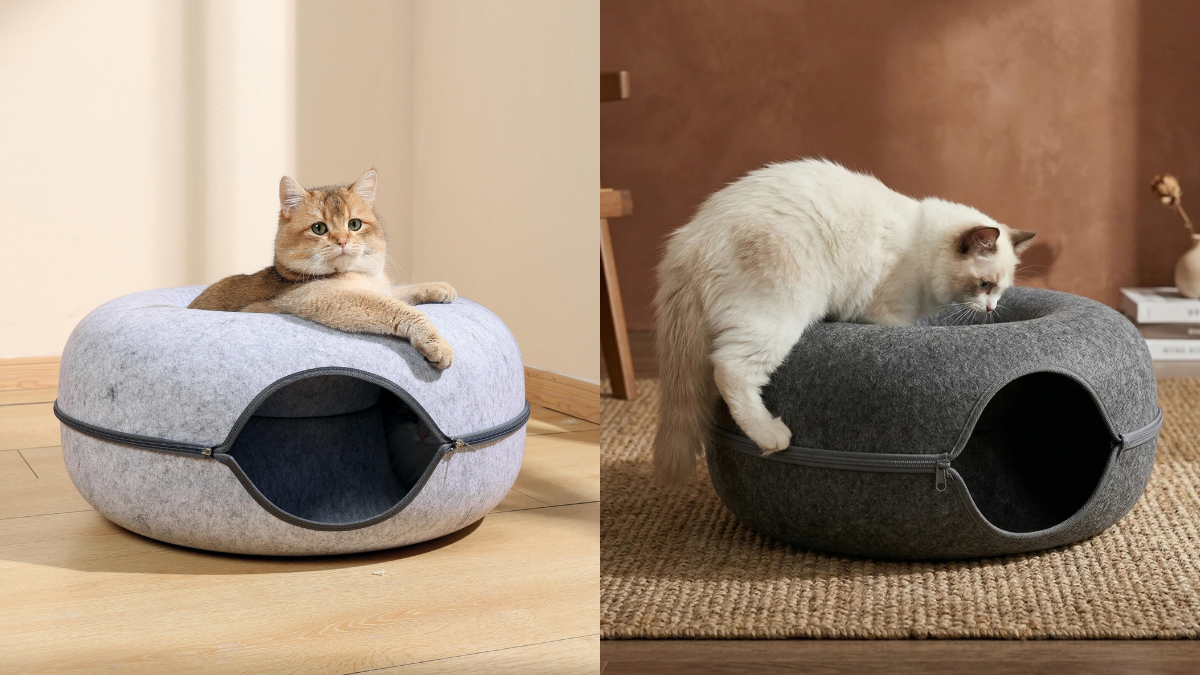
Cats enjoy having places where they can hide, play, rest, and observe their surroundings. Many cats are naturally curious and appreciate enclosed spaces that make them feel secure. Providing a comfortable resting area that also encourages play can help make an indoor environment more engaging for a feline companion. The MPets Tunnel Bed is an option for cat owners looking to combine a cozy resting space with the fun of a tunnel-style design.
It can offer cats an inviting place to explore while providing a sheltered area for relaxation. Depending on the specific design, a product in this category may combine a soft bed with an enclosed passage, giving cats opportunities to hide, crawl through, curl up, or simply enjoy a quiet moment.
A cat accessory intended to provide a place for resting and, depending on its construction, opportunities for hiding and play. Its tunnel-inspired design distinguishes it from a traditional flat pet cushion.
Cats often seek out enclosed spaces because these areas can provide a sense of security. A tunnel-style bed may appeal to cats that enjoy crawling under furniture, hiding inside boxes, or resting in covered spaces.
The exact construction and features depend on the particular MPets model. Buyers should check the product description to confirm its dimensions, materials, shape, cushioning, and whether it includes separate entrances or a dedicated sleeping section.
A tunnel bed may be especially suitable for indoor cats that need additional enrichment. Instead of serving only as a place to sleep, it can become part of the cat’s daily environment, offering another place to explore and relax.
Key Features to Consider
1. Tunnel-Inspired Design
The tunnel shape is one of the main characteristics to consider when evaluating this type of cat bed. Enclosed passages allow cats to enter a sheltered space and explore it at their own pace.
Some cats enjoy moving through tunnels because they can investigate their surroundings while remaining partially hidden. Others may use the enclosed area as a quiet retreat when they want to rest away from household activity.
The appeal of this design depends on the individual animal. Cats that prefer open spaces may be less interested in a tunnel bed, so observing your pet’s existing habits can help determine whether this style is appropriate.
2. Comfortable Resting Area
A cat bed should provide a suitable surface for resting. Depending on the model, it may include a cushioned area or soft materials intended to make relaxation more comfortable.
Before purchasing, examine the product specifications to understand the type and thickness of the cushioning. A bed should provide enough room for the cat to curl up naturally without feeling cramped.
Comfort also depends on the cat’s age, size, and mobility. Kittens may enjoy compact spaces, while larger adult cats need sufficient room to turn around and stretch. Senior cats may benefit from a low entrance that does not require climbing or squeezing through a narrow opening.
An enclosed resting area can offer cats a place to retreat when they want quiet time. This can be useful in busy households where visitors, children, or other pets create frequent activity.
A sheltered bed may help a cat feel more comfortable in its environment, particularly when placed in a calm location. However, it should not be used to confine the animal or prevent it from leaving freely.
Positioning the bed away from loud appliances and high-traffic walkways can make it more inviting. Cats should always have access to fresh water, a clean litter box, and other essential resources.
4. Opportunities for Play
Tunnel-style beds can provide environmental enrichment by giving cats a new space to explore. A cat may walk through the tunnel, hide inside it, investigate its openings, or use it during interactive play.
This type of enrichment can be particularly helpful for indoor cats, which may have fewer opportunities to explore changing outdoor environments.
Owners can encourage play by using a suitable toy near the entrance or allowing the cat to investigate the bed naturally. Avoid forcing a nervous cat inside, as this may create a negative association with the product.
5. Space and Placement
The size of a tunnel bed affects how easily it fits into the home and whether the cat can use it comfortably. Measure the intended location before purchasing and compare those measurements with the product specifications.
A suitable location might be a quiet corner of a living room, bedroom, or dedicated pet area. The bed should sit on a stable surface where it will not slide easily during use.
It is also important to leave enough room around the entrance for the cat to approach and exit comfortably. Avoid placing the bed where doors, drawers, or frequently moved furniture could trap or obstruct it.
Benefits of the MPets Tunnel Bed
One potential benefit of a tunnel bed is that it combines a resting area with an enclosed space. Cats can choose to sleep, observe the room, or retreat when they need a break from activity.
Having a familiar hiding place may be particularly helpful during periods of change, such as when visitors arrive or furniture is rearranged. Nevertheless, persistent hiding or sudden changes in behavior can indicate stress or illness and should not automatically be attributed to normal preferences.
Encourages Natural Curiosity
Cats are curious animals that often investigate new objects and spaces. A tunnel-style bed introduces a different feature into their environment and may encourage exploration.
This can be useful for indoor cats that benefit from a variety of safe places to investigate. Rotating toys and providing scratching surfaces, climbing opportunities, and interactive play can further enrich the home environment.
Supports Interactive Play
A tunnel bed can become part of a play routine. Owners can move a wand toy near the opening or encourage the cat to follow a toy around the structure.
Interactive play offers an opportunity for exercise and bonding between cats and their owners. Sessions should be appropriate for the cat’s age, health, and energy level, with time for rest between activities.
Creates a Dedicated Cat Space
A tunnel bed can help establish a designated area for your pet. Instead of relying on furniture or household storage spaces, the cat has another place to rest and explore.
This can be particularly helpful in smaller homes where space needs to be organized carefully. Choosing a location the cat already enjoys may increase the likelihood that it will use the bed regularly.
How to Introduce the Tunnel Bed to Your Cat
Some cats investigate new beds immediately, while others need more time. A gradual introduction can help your pet feel comfortable.
First, place the bed in a familiar, quiet area. Avoid moving it repeatedly during the first few days, as a consistent location may help the cat recognize it as a safe space.
Second, allow your cat to approach voluntarily. Let it sniff the material, inspect the entrance, and explore the interior without interference.
Third, consider placing a familiar blanket inside if the design permits and the material can accommodate it safely. A familiar scent may make the space more inviting.
You can also use treats or toys to encourage exploration. Place them near the entrance initially rather than immediately at the far end of the tunnel. Reward curiosity without pressuring the cat to enter.
If your cat ignores the bed, try changing its location or introducing it at a quieter time. Some cats need several days or longer to become comfortable with a new accessory.
Cleaning and Maintenance
Regular cleaning is essential for keeping a cat bed comfortable and hygienic. Fur, dust, and other debris can collect inside enclosed spaces, particularly when a cat uses the bed frequently.
Remove loose fur regularly and inspect the seams, lining, and entrance for signs of wear. If the structure contains flexible supports or internal components, check that they remain securely covered and cannot injure the cat.
Allow washed materials to dry completely before returning the bed to use. Damp bedding can develop unpleasant odors and become an unsuitable resting environment.
If the product becomes damaged, develops sharp edges, or contains loose pieces that your cat could swallow, stop using it until the problem is addressed.
Potential Limitations
The first limitation is personal preference. Some cats strongly prefer open cushions, window perches, or elevated surfaces. A tunnel bed may be less appealing to these animals.
The second consideration is size. A tunnel that is too narrow can make a larger cat uncomfortable, while a small resting area may not provide enough room for stretching. Always check measurements rather than relying solely on product photographs.
Cleaning can also require additional attention because enclosed spaces may collect fur and debris. Owners should determine whether the materials are easy to maintain and whether the structure can be cleaned thoroughly.
Finally, a tunnel bed should not be considered a substitute for interactive play, exercise, scratching opportunities, or regular attention from its owner. It is one component of a stimulating home environment rather than a complete enrichment solution.
Conclusion
The MPets Tunnel Bed is a potential option for cat owners looking to combine a resting place with opportunities for hiding and exploration. A tunnel-inspired design may appeal to curious cats and provide a sheltered space where they can relax away from household activity.
Its suitability depends on the exact model, the cat’s size and temperament, and the available space in the home. Checking the product specifications, introducing the bed gradually, and maintaining it regularly can help improve the experience.