Keeping a dog entertained is an important part of responsible pet ownership. Dogs need more than food, water, and a comfortable place to sleep. Regular play can provide opportunities for physical activity, exploration, and interaction with their owners. For dogs that enjoy chasing, fetching, and investigating moving objects, interactive toys can add variety to their daily routine.
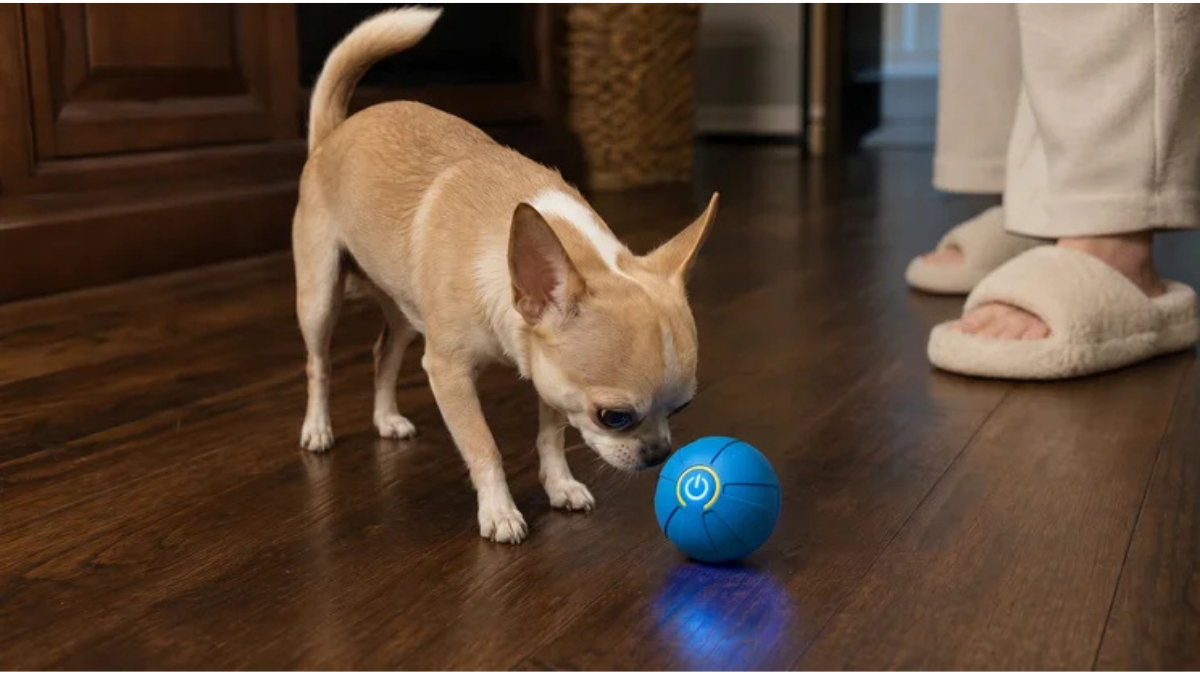
The PetDroid Interactive Dog Ball is designed to provide dogs with an engaging play experience while giving owners a convenient option for indoor or outdoor entertainment. Depending on the specific model, PetDroid interactive balls may include features such as automatic movement, bouncing or rolling action, obstacle interaction, and rechargeable operation. Because product designs can differ, owners should check the specifications of the exact model before purchasing.
What Is an Interactive Dog Ball?
A traditional dog ball usually requires an owner or another person to throw it. An interactive ball adds another dimension by creating movement that can encourage a dog to chase or investigate it.
An automatic or motion-based toy can be particularly interesting for dogs that enjoy following moving objects. Instead of remaining stationary until someone throws it, an interactive ball can move around independently, creating a more dynamic play session.
The PetDroid Interactive Dog Ball is intended to provide this type of engagement. Its purpose is not simply to replace human interaction but to give dogs another way to play and remain occupied.
Encouraging Physical Activity
Regular physical activity is important for many dogs. The appropriate amount depends on factors such as breed, age, size, health, temperament, and individual energy level.
An interactive ball can encourage movement by giving a dog something to follow, chase, or push around. This can make play more interesting than simply leaving a toy on the floor.
For energetic dogs, a moving ball may provide an additional activity during the day. However, owners should choose toys and play sessions appropriate to their dog’s physical abilities.
An interactive toy should complement walks and other forms of exercise rather than being viewed as a complete substitute for outdoor activity.
Mental Engagement
Physical activity is only one aspect of play. Dogs can also benefit from opportunities to explore and respond to changing situations.
A moving toy can encourage a dog to pay attention, follow movement, and decide how to interact with the object. These simple activities can make play more stimulating.
Dogs vary considerably in their reactions to toys. Some may immediately chase a moving ball, while others may initially be cautious. Allowing the dog to approach the toy at its own pace can make the experience more comfortable.
Automatic Movement
One of the main attractions of an interactive dog ball is automatic movement. Depending on the PetDroid model, the ball may roll, bounce, or change direction without requiring the owner to continuously operate it.
This can be convenient when an owner is busy with another task but still wants to provide their dog with an opportunity for play.
Automatic movement can also create unpredictability, which may encourage a curious dog to follow the toy. Some models are designed to interact with obstacles or change direction when they encounter objects in their environment.
The exact movement behavior depends on the particular PetDroid product, so users should read the product instructions before use.
Indoor Play
They can be useful indoors, particularly during bad weather or when outdoor activity is temporarily limited.
A dog can play with the ball in an open room, hallway, or other suitable area. Before turning the toy on, owners should remove fragile objects and other items that could be knocked over.
The available space should also be appropriate for the dog’s size and play style. A large, energetic dog may require more room than a small dog.
Owners should supervise initial indoor sessions to see how the dog interacts with the toy and whether the environment is safe.
Outdoor Play
Depending on the specific model’s construction and manufacturer’s instructions, an interactive ball may also be suitable for outdoor use.
Outdoor play can provide more room for movement and allow dogs to explore different surfaces. However, owners should consider environmental conditions before using an electronic toy outdoors.
Wet grass, puddles, mud, extreme heat, and other conditions may not be suitable for every electronic toy. The manufacturer’s water-resistance and outdoor-use instructions should always be followed.
The toy should also be used in a secure area where the dog cannot run into traffic or other hazards while chasing it.
Material and Durability
Durability is particularly important for dog toys because dogs may bite, chew, scratch, push, and carry them.
Owners should check whether a particular version is designed to withstand chewing and what level of interaction the manufacturer recommends.
It is important to remember that no dog toy is completely indestructible. A strong chewer may damage a toy that survives easily with another dog.
Owners should inspect the ball regularly for cracks, loose components, exposed electronics, damaged covers, or other signs of wear. If the toy becomes damaged, it should be removed from the dog’s reach.
Battery and Charging
Because interactive dog balls often use electronic movement, battery performance is an important consideration.
Rechargeable models can be convenient because owners do not have to replace disposable batteries regularly. However, charging requirements and battery life can vary.
Owners should charge the device according to the manufacturer’s instructions and use the appropriate charging equipment.
The toy should be stored safely while charging and kept away from dogs unless the manufacturer specifically states that it is safe to operate while connected to power.
Choosing the Right Play Environment
The environment can have a major impact on how useful an interactive dog ball becomes.
A clear floor is generally preferable for indoor play. Small objects, electrical cords, delicate decorations, and other hazards should be moved out of the play area.
Outdoor spaces should be secure and appropriate for the dog. A fenced yard can provide more freedom than an open public area, where the dog might chase the toy beyond a safe boundary.
Owners should also consider noise. Some interactive toys make sounds or produce mechanical movement that certain dogs may find exciting while others may find unsettling.
Introducing the Toy to Your Dog
A new interactive toy may require an introduction period. Instead of immediately turning the ball on at full activity, owners can first allow the dog to sniff and inspect it while it is switched off.
Once the dog appears comfortable, the toy can be activated for a short period. Positive interaction can encourage the dog to investigate further.
If the dog shows fear or avoidance, the owner should not force interaction. Every dog has individual preferences, and another type of toy may be more suitable.
Supervision and Safety
Even an automated dog toy should not necessarily be considered a completely unsupervised activity.
Owners should supervise their dog, especially during the first few play sessions. This helps identify whether the dog attempts to chew the ball aggressively, becomes overly excited, or interacts with it in an unsafe way.
The toy should also be kept away from very young children if it contains small removable parts or electronic components that are not intended for children.
Regular inspection is another important safety habit. Any damaged toy should be replaced or repaired according to the manufacturer’s guidance.
Keeping Play Balanced
Interactive toys can be valuable, but dogs still benefit from direct interaction with their owners. Playing fetch together, taking walks, practicing training exercises, and spending quiet time together are all important aspects of a dog’s routine.
An interactive ball should therefore be viewed as an additional enrichment tool rather than a replacement for companionship.
Rotating different toys can also help maintain interest. A dog may become bored if the same toy is available continuously, while introducing different activities can provide variety.
Final Thoughts
The PetDroid Interactive Dog Ball can be an interesting option for dog owners looking to add movement and variety to their pet’s play routine. Its interactive design can encourage dogs to chase, follow, investigate, and interact with a moving object.
Depending on the specific model, features such as automatic movement, rechargeable power, obstacle interaction, and indoor or outdoor functionality may make the toy convenient for everyday use.
However, choosing the right interactive toy requires consideration of the dog’s size, age, energy level, chewing habits, and personality. Owners should also inspect the toy regularly and follow the manufacturer’s safety and maintenance instructions.
Most importantly, interactive toys work best as part of a balanced routine that includes exercise, mental stimulation, training, and human companionship.
For dogs that enjoy moving toys and chasing games, they can provide another way to make playtime more engaging. With appropriate supervision and a suitable environment, it can become a useful addition to a dog’s collection of enrichment activities.