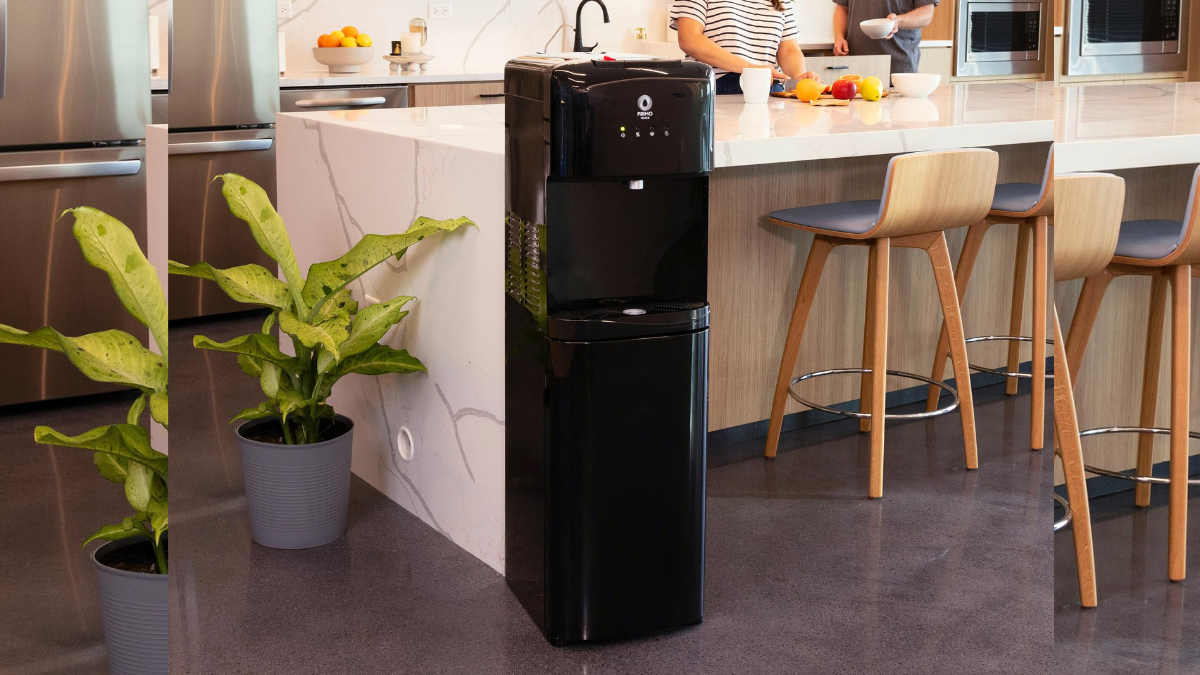
Access to clean, refreshing drinking water is an essential part of a comfortable home or productive workplace. While traditional water bottles and kitchen faucets can provide drinking water, a dedicated water dispenser offers a convenient alternative for households, offices, waiting areas, and other shared environments. The Primo Water Dispenser is designed to make accessing drinking water easier while providing useful features for everyday convenience.
Primo offers a range of water dispensers with different configurations and features. Depending on the model, users may have access to room-temperature, cold, or hot water, while some dispensers are designed for bottom-loading bottles to make replacement easier. Because features vary between models, it is important to review the specifications of the exact dispenser before purchasing.
What Is a Primo Water Dispenser?
This is an appliance designed to provide drinking water from a replaceable water bottle or, depending on the model, another compatible water source. Instead of repeatedly opening individual bottles, users can place a larger water container into the dispenser and access water through dedicated dispensing controls.
This setup can be particularly practical for families and workplaces where multiple people drink water throughout the day.
These are designed around three basic temperature options: cold, room temperature, and hot. The exact configuration depends on the model. Cold water can be useful for immediate refreshment, room-temperature water can be convenient for general drinking, and hot water can simplify the preparation of tea, instant beverages, oatmeal, and other foods.
Convenient Access to Drinking Water
Instead of storing numerous small bottles in a refrigerator, users can keep a larger supply of water in one location. This can reduce clutter and make drinking water readily accessible.
In an office environment, a dispenser can serve multiple employees from a central location. In a home, it can provide an alternative source of drinking water for family members.
The convenience becomes particularly noticeable when the dispenser provides multiple temperature options. A user can select chilled water for immediate drinking or hot water when preparing a beverage without having to heat water separately.
Bottom-Loading Design
One feature available on some Primo dispensers is bottom-loading bottle placement.
Traditional top-loading dispensers require the user to lift a large bottle and turn it upside down before placing it on the dispenser. This can be difficult when the container is heavy.
A bottom-loading design places the bottle inside the lower cabinet of the dispenser. The water is then pumped upward into the dispensing system.
This configuration can make bottle replacement easier and can create a cleaner visual appearance because the large water container is concealed inside the cabinet.
For households where different people are responsible for changing water bottles, bottom loading can be a particularly useful feature.
Hot and Cold Water Options
Temperature flexibility is another reason consumers choose water dispensers.
Cold water is useful throughout the day, especially in warm environments. Having chilled water available without repeatedly filling bottles and placing them in a refrigerator can make hydration more convenient.
Hot water provides another advantage. Instead of waiting for a kettle or saucepan to heat, users can access hot water directly from a compatible dispenser.
Hot water can be useful for tea, coffee, instant soup, oatmeal, and other quick preparations. Users should always exercise caution when dispensing hot water, particularly in homes with children.
Not every Primo model offers identical temperature options, so consumers should verify the specifications before buying.
Design for Home and Office Environments
A water dispenser can become a permanent part of a room’s layout, making design and footprint important considerations.
These are generally designed with a vertical profile that allows them to occupy relatively little floor space compared with storing numerous large water bottles separately.
The dispenser can be positioned in a kitchen, break room, office, reception area, or other suitable location. However, adequate clearance and access should be maintained according to the manufacturer’s instructions.
A well-positioned dispenser can also encourage people to drink more water simply by making it visible and easily accessible.
Improving Workplace Convenience
Water dispensers can be particularly useful in professional environments.
An office that provides accessible drinking water can create a more convenient workplace for employees and visitors. Instead of relying on individual bottles, people can refill reusable containers or pour water into glasses.
A centralized dispenser can also help establish a dedicated hydration area in an office kitchen or break room.
For businesses, the choice of dispenser should consider factors such as the number of users, bottle capacity, maintenance requirements, dispensing speed, and available floor space.
A small office may need only a basic dispenser, while a larger workplace may benefit from a higher-capacity system or additional water-service options.
Water Bottle Compatibility
Different dispensers may be designed for particular bottle configurations. Some may work with standard refillable water containers, while others may be compatible with specific Primo water-service products.
Consumers should check the manufacturer’s current compatibility information before purchasing replacement bottles.
This is particularly important because a dispenser’s convenience depends on having a reliable supply of compatible water. Knowing where replacement bottles can be obtained and how they are exchanged can make long-term ownership easier.
Cleaning and Maintenance
Regular cleaning is essential for any appliance that dispenses drinking water.
The dispensing area can come into frequent contact with cups, bottles, and hands, so keeping it clean is important. The drip tray should also be emptied and cleaned regularly to prevent accumulated water and residue.
Internal components may require periodic sanitization depending on the dispenser design and manufacturer’s recommendations.
Users should always follow the care instructions for their particular Primo model. Cleaning requirements can vary between dispensers, particularly when comparing traditional bottled-water models with more advanced systems.
The outside of the dispenser can generally be kept clean by wiping it with an appropriate cloth and cleaning solution recommended by the manufacturer.
Replacing the Water Bottle
Bottle replacement should be performed carefully.
With a top-loading dispenser, the user may need to lift a heavy bottle and position it upside down. A bottom-loading dispenser can reduce this lifting requirement because the bottle is positioned inside the lower compartment.
Regardless of design, users should make sure the bottle is correctly positioned before operating the dispenser.
If water leaks, the dispenser should be checked according to the manufacturer’s troubleshooting instructions. Users should not attempt to disassemble electrical or mechanical components unless they are specifically instructed to do so.
Safety Considerations
Safety is an important consideration, particularly for models that provide hot water.
Hot-water dispensing can cause burns if used incorrectly. Children should be supervised around a dispenser with a hot-water function, and users should keep cups and hands away from the dispensing outlet until the water has been safely collected.
The dispenser should also be placed on a stable, level surface. Electrical components should be protected from unnecessary exposure to water.
Users should follow the manufacturer’s instructions concerning installation, cleaning, bottle replacement, and electrical operation.
If the dispenser develops an unusual smell, sound, leak, or electrical problem, it should be turned off and inspected according to the appropriate support procedure.
Choosing the Right Primo Dispenser
A household may prioritize a compact design and cold-water access. Another household may prefer hot and cold dispensing for beverages and cooking. An office may place greater importance on bottle capacity, ease of replacement, and durability.
Consumers should consider several factors before purchasing:
- Loading style: Decide whether top-loading or bottom-loading is more convenient.
- Temperature options: Determine whether cold, room-temperature, or hot water is required.
- Capacity: Consider how frequently the household or office consumes water.
- Space: Measure the available floor and overhead space.
- Maintenance: Check cleaning and sanitization requirements.
- Bottle compatibility: Confirm which water containers can be used.
- Safety: Pay particular attention to hot-water safety features.
- Long-term cost: Consider the cost and availability of replacement water.
Taking these factors into account can help buyers select a dispenser that fits their daily routine.
Benefits for Everyday Hydration
When drinking water is readily available, people may find it easier to maintain regular hydration habits throughout the day. A dispenser can also reduce reliance on individually packaged bottles when users have access to larger refillable containers.
For families, this can create a convenient central water station. For offices, it can provide employees with an easily accessible source of drinking water.
A dispenser may also simplify entertaining. When guests visit, chilled or room-temperature water can be served quickly without requiring numerous individual bottles.
Is a Primo Water Dispenser Worth Considering?
For people who regularly consume bottled or filtered drinking water, a dispenser can provide a practical upgrade in convenience.
Primo’s range of dispenser designs means buyers can select a configuration based on their household or workplace needs. Features such as bottom-loading access, multiple temperature options, and dedicated dispensing controls can make everyday water service easier.
However, buyers should evaluate the total ownership experience rather than focusing on features alone. The availability and cost of compatible water bottles, maintenance requirements, electricity usage, and available space should all be considered.
A water dispenser is most useful when it fits naturally into the user’s routine.
Final Thoughts
This is designed around a straightforward objective: make drinking water easier to access throughout the day. Its usefulness comes from combining a large water supply with convenient dispensing, while selected models add features such as cold and hot water options or bottom-loading bottle storage.
For homes, offices, and shared spaces, a water dispenser can provide a practical alternative to keeping numerous individual bottles available. It can also make hot-water preparation easier when a compatible model includes a hot-water function.
Before purchasing, consumers should compare individual Primo models carefully. Loading style, temperature options, capacity, dimensions, bottle compatibility, maintenance requirements, and safety features can vary.
With appropriate installation, regular cleaning, and careful use, it can become a valuable part of a modern kitchen, workplace, or common area. For anyone seeking a convenient and organized way to keep drinking water readily available, it is a practical appliance worth considering.