Deep-fried food is popular in homes, restaurants, food stalls, and commercial kitchens because it can transform simple ingredients into crisp, flavorful meals. From French fries and chicken wings to onion rings, shrimp, and vegetables, deep frying offers a distinctive texture that is difficult to reproduce with many other cooking methods. For people who regularly prepare fried foods, a dedicated electric fryer can make the process more convenient and consistent.
These are designed around this idea. The brand offers electric countertop fryers in different configurations, including single-tank and dual-tank models. Depending on the model, they can provide stainless-steel construction, adjustable temperature controls, removable baskets, lids, and relatively large oil capacities. Some models are marketed for both home and commercial use.
What Is a TOPKITCH Fryer?
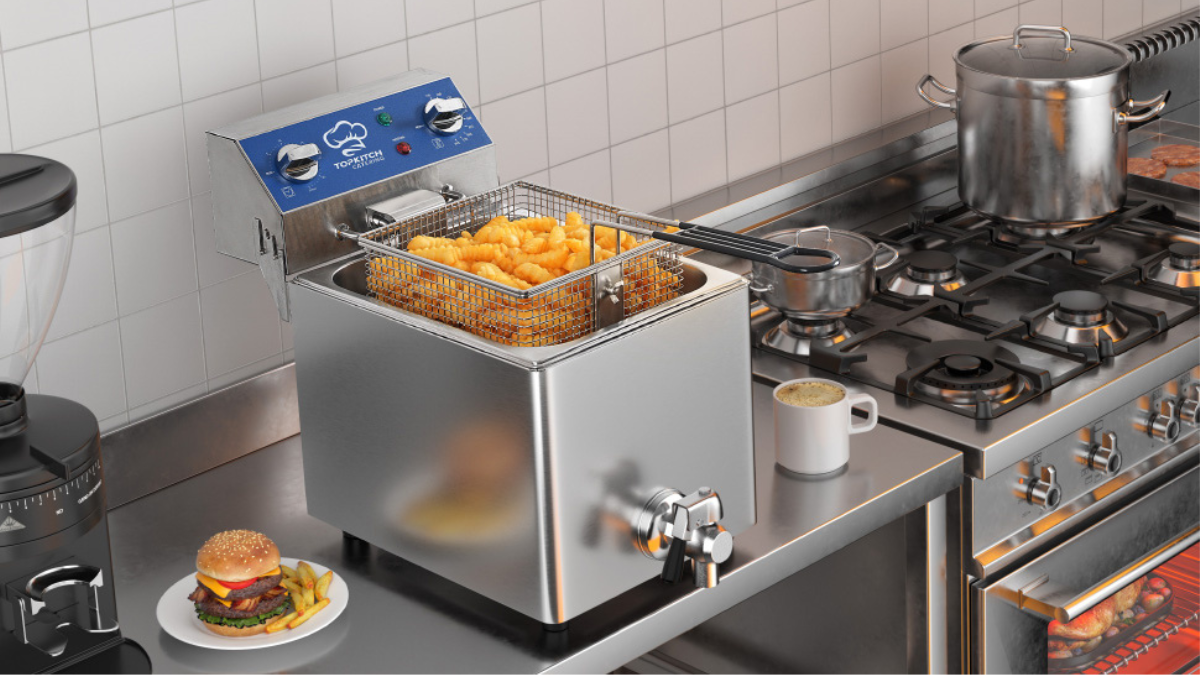
This is an electric deep-frying appliance designed to heat cooking oil to a controlled temperature. Unlike frying food in a saucepan or stockpot, a dedicated fryer provides a purpose-built tank, heating element, basket, and temperature-control system.
One documented 10-liter TOPKITCH model has an 1,800-watt heating element, a 10-liter oil tank, stainless-steel construction, and a temperature range of 122°F to 390°F, or approximately 50°C to 200°C.
Also offers larger dual-tank configurations. One documented model has two independent 10-liter tanks, giving it a combined oil capacity of 20 liters and two separate heating systems.
These different configurations mean that shoppers should look carefully at the exact model before purchasing because capacity, power requirements, dimensions, and controls can vary.
Stainless-Steel Construction
Stainless steel is widely used in commercial kitchen equipment because it is durable, relatively easy to clean, and well suited to environments where appliances are exposed to heat, oil, and frequent use.
A stainless-steel exterior can also give the fryer a professional appearance. This makes countertop models suitable for kitchens where users want equipment that looks more substantial than a small household fryer.
The exact construction varies by model, but documented TOPKITCH units include stainless-steel oil tanks and components designed for repeated cooking. Some commercial models also use food-grade 304 stainless steel for their heating elements.
Large Oil Capacity
Capacity is one of the most important factors when selecting a deep fryer.
They provides considerably more oil capacity than many compact household fryers. This can be useful when preparing food for several people or when cooking relatively large batches.
A larger oil tank can also help accommodate bigger frying baskets, allowing users to prepare more food at once. However, a larger capacity does not mean the basket should always be filled to its maximum.
Overloading the basket can cause the oil temperature to drop quickly. According to TOPKITCH operating instructions, frying smaller batches can help maintain oil temperature and improve crispness.
For households that only fry small portions occasionally, a 10-liter fryer may be more capacity than necessary. For frequent cooking or entertaining, however, the additional capacity can be valuable.
Adjustable Temperature Control
Temperature control is essential for successful deep frying.
Different foods require different cooking temperatures, and maintaining the correct oil temperature helps determine whether the finished food is crisp and properly cooked or greasy and underdone.
Documented models provide adjustable temperature controls from approximately 50°C to 200°C. Some models also include heating indicator lights that show when the fryer is actively heating.
The general principle is simple: preheat the oil to the appropriate temperature before adding food. Adding too much cold food at once can cause the oil temperature to fall, which may produce a less crisp result.
Users should always follow the cooking temperatures recommended by their recipes and the instructions for their specific fryer.
Frying Baskets
A frying basket is one of the most practical components of a dedicated fryer.
They use removable baskets that allow food to be lowered into the hot oil and lifted out once cooking is complete. Some documented models include baskets with cool-touch handles.
The basket also makes it easier to drain excess oil after frying. Once the food is cooked, the basket can be raised and allowed to rest above the oil tank.
This is considerably more convenient than attempting to remove individual pieces with tongs from a deep pot.
When loading the basket, avoid packing food too tightly. Adequate space allows hot oil to circulate around the food and helps promote more even cooking.
Single-Tank vs. Dual-Tank Models
A single-tank fryer is relatively straightforward. It provides one oil reservoir and one heating system, making it suitable for cooking one type of food at a time.
This can be useful in a commercial environment or when preparing different foods simultaneously. For example, one tank could be used for chicken while the other is used for fries.
Separate tanks can also help prevent flavors from mixing. However, dual-tank models require more space and electrical capacity, so they may be excessive for a small household kitchen.
What Can You Cook in a TOPKITCH Fryer?
A dedicated fryer can prepare a wide variety of foods.
French fries are one of the most obvious choices. Fresh potatoes can be cut into strips, prepared appropriately, and fried until golden and crisp.
Chicken is another popular option. Wings, tenders, and other pieces can develop a crisp exterior when properly coated and fried.
Seafood such as shrimp and fish can also be prepared in a deep fryer. Vegetables, onion rings, mozzarella sticks, and other battered or breaded foods are additional possibilities.
The fryer can also be useful for preparing snacks and appetizers for parties. A large-capacity model can make it easier to produce several batches when entertaining guests.
However, the cooking temperature and time should always be adjusted according to the specific food and recipe.
Achieving Crispy Results
Crispy fried food depends on more than simply putting ingredients into hot oil.
Oil temperature is critical. If the oil is too cool, food can absorb excessive oil and become greasy. If the temperature is too high, the exterior may brown or burn before the interior is properly cooked.
The troubleshooting instructions specifically identify low oil temperature, insufficient preheating, and overloaded baskets as possible causes of food that is not crisp.
For consistent results, allow the fryer to preheat fully before adding food. Cook manageable batches and avoid overcrowding the basket.
It is also important to remove excess moisture from food when appropriate. Water and hot oil can react violently, so wet ingredients should be handled carefully.
Safety Features
Deep frying requires careful attention because cooking oil can become extremely hot.
Some models incorporate over-temperature protection. A documented single-tank model is designed to shut off if the temperature exceeds approximately 240°C, or 464°F.
The documented dual-tank model also includes double over-temperature protection using a thermostat and limiting thermostat.
These features are important, but they do not eliminate the need for safe operation.
The fryer should be placed on a stable, heat-resistant surface, and the oil should remain between the indicated minimum and maximum levels. TOPKITCH instructions also warn against leaving the fryer unattended and emphasize caution when handling hot oil.
Users should never add water to hot oil and should allow the fryer to cool before cleaning or moving it.
Cleaning and Maintenance
Regular cleaning is important for both hygiene and performance.
After the oil has cooled completely, it can be handled according to the manufacturer’s instructions. The basket and removable components can generally be cleaned separately.
The manuals instruct users not to immerse electrical components or the control assembly in water. The heating element and electrical controls should be protected from moisture.
Oil should also be monitored. Old or contaminated oil can affect flavor and cooking performance. Troubleshooting guidance identifies old oil as one possible reason for poor frying results or excessive smoking.
Keeping the fryer clean can help prevent buildup of crumbs and residue that could burn during later cooking sessions.
TOPKITCH Fryer for Home Use
For families that regularly prepare fried foods, a dedicated appliance can be more convenient than heating a large pot of oil on the stove.
The main consideration is space. A 10-liter fryer is not a tiny appliance, and dual-tank models require even more room. A home cook should have an appropriate location where the fryer can be operated safely without being crowded by other appliances.
Electrical requirements should also be considered. Some dual-tank models use two 120V connections because each side has its own 1,800-watt heating element.
TOPKITCH Fryer for Small Businesses
For restaurants, food stalls, cafés, and other food-service operations, capacity and consistency are particularly important.
A dual-tank fryer can allow operators to prepare different foods simultaneously, potentially improving workflow during busy periods.
The stainless-steel construction and adjustable temperature controls also fit the needs of frequent frying.
However, businesses should verify local electrical, fire-safety, ventilation, food-safety, and commercial-equipment requirements before installing or operating a fryer. The commercial manual notes that installation, servicing, and certain maintenance procedures may need to be handled by qualified technicians.
Potential Advantages
Large capacity is useful for preparing multiple servings.
Adjustable temperature control allows users to adapt the fryer to different foods.
Stainless-steel construction provides a durable, professional-style design.
Removable baskets make loading and draining food convenient.
Dual-tank options provide greater flexibility for users who need to cook different foods simultaneously.
Potential Drawbacks
There are also some limitations to consider.
A large fryer can take up considerable counter space. It may also require more electrical power than a small household appliance.
Deep frying itself requires more oil, cleanup, and attention than methods such as baking or air frying.
Another consideration is the learning curve. Achieving consistent results requires understanding oil temperature, batch size, cooking time, and food preparation.
Finally, buyers should pay close attention to the specifications of the exact TOPKITCH model they are considering because the brand offers multiple configurations with different capacities and electrical requirements.
Final Thoughts
Provide a practical solution for people who want dedicated equipment for deep frying. With models featuring large oil capacities, stainless-steel construction, adjustable temperature controls, removable baskets, and optional dual-tank configurations, the brand offers choices for both home and commercial-style cooking.
The most important factor is choosing a model that matches your needs. A single 10-liter fryer may be sufficient for a family or small kitchen, while a dual 10-liter model can be more appropriate for high-volume cooking or preparing different foods simultaneously.
Regardless of the model, safe operation and proper maintenance are essential. Keep oil at the recommended level, avoid overcrowding the basket, monitor temperature carefully, and allow hot oil and equipment to cool completely before cleaning.